

Flanged vs screw plug heaters: which one is right for your needs?
Stand in front of a tank that needs heating and you’ll usually land on one of two answers, a flanged heater or a screw plug one. They do the same core job, warming a fluid directly, yet they’re built and fitted differently enough that picking the wrong one means a harder install, awkward maintenance, or a unit that just isn’t sized for the work. So let’s lay the two side by side and figure out which belongs in your application.
What are flanged and screw plug heaters?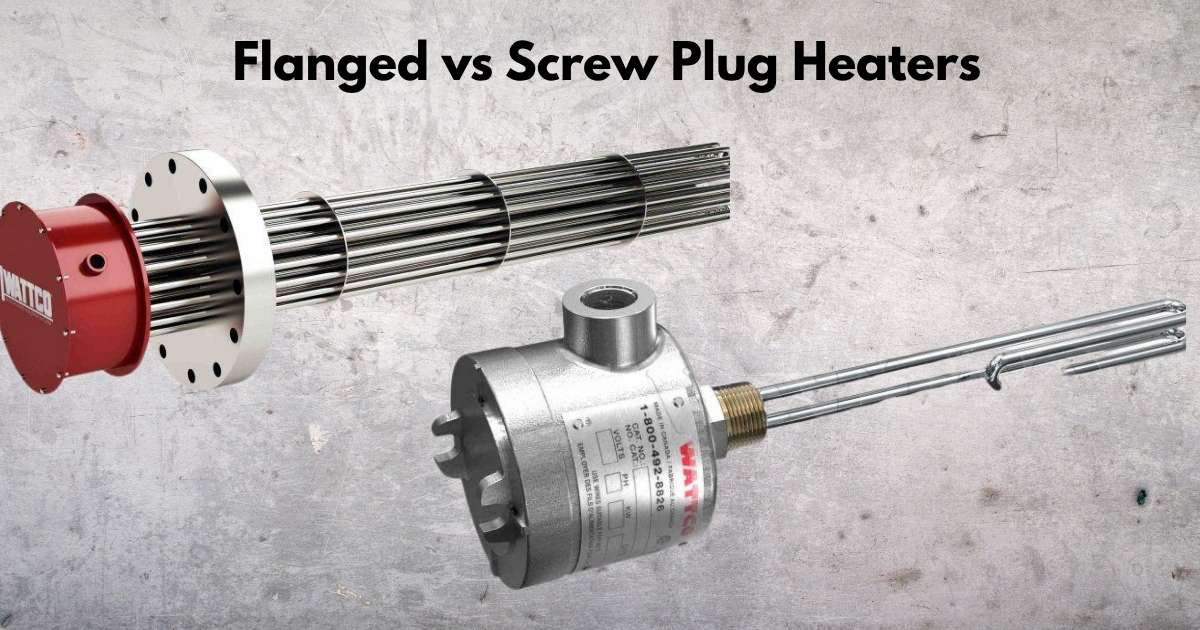
Both are industrial immersion heaters, and both transfer heat straight into liquids, and into gases where the design suits it. That’s the shared ground.
Where they part ways is in how they mount, how much heat they can carry, and the jobs they’re best pointed at. Get those differences straight and the choice gets a lot clearer.
How do flanged immersion heaters work?
In a flanged heater, the tubular elements sit on a flange, and that flange bolts onto a matching connection on the tank or vessel. A flange has space for a bigger element bundle, so the design tends to handle the heavier work, your larger tanks, your higher loads, the tougher processes where having capacity in reserve actually matters.
How do screw plug immersion heaters work?
A screw plug heater takes a simpler route. The elements mount on a threaded fitting that screws directly into the tank or vessel, no bolted flange involved. That makes it compact and genuinely easy to install, which is why it tends to show up on smaller heating jobs where you don’t need a huge element bundle and you’d rather keep the fitting straightforward.
Flanged vs screw plug heaters: what’s the difference?
The quickest way to see it is side by side.
|
Factor |
Flanged heater |
Screw plug heater |
|
Mounting |
Bolted flange connection |
Threaded fitting |
|
Heating capacity |
Higher kilowatt loads |
Smaller to moderate loads |
|
Tank size |
Larger tanks and vessels |
Smaller tanks and vessels |
|
Installation |
Needs more space and a matching flange |
Compact, simpler to fit |
|
Maintenance |
More access, bigger job |
Simpler to pull and swap |
That’s the headline view, and each row rewards a closer look.
Installation and mounting requirements
It comes down to bolted against threaded, and the knock-on effects run deeper than you’d first guess. A flange wants a matching connection on the vessel and more elbow room around it, and the bolting takes real work. A screw plug just threads in, so it asks for less space and less fuss. Worth thinking about accessibility too, because whatever’s easy to bolt in today you’ll also want to reach again when it’s time to service it.
Heating capacity and performance
This is the real dividing line. Flanged heaters are the usual pick when the kilowatt requirement climbs, simply because the flange carries a larger element bundle. Screw plug heaters settle comfortably at the lower end of the load range. Whichever you pick, performance still comes back to right sizing and right watt density, so a screw plug that’s been specified properly will beat a carelessly specified flange every time inside its range.
Maintenance and replacement
Picture the day you have to haul it out. A screw plug is usually faster to pull, inspect, clean, and put back, which tends to mean less downtime. A flanged unit is a heftier job, more bolts, more access to arrange. Neither’s a mark against the design, but if the heater sits somewhere tight or gets serviced a lot, that extra effort stacks up over the years.
Where are flanged and screw plug heaters commonly used?
Different processes tug you in different directions. It’s the blend of fluid properties, tank size, operating temperature, and the heat you actually need that settles it, and once those are clear, one design tends to sit better than the other.
When should you use a flanged heater?
Reach for a flange when the job is big. Large industrial storage tanks, oil heating at scale, chemical processing, high-capacity water heating systems, the sort of work where you need a sizeable bundle of heating elements to hit the load. If the demand is heavy, the flange earns its place.
When is a screw plug heater the better choice?
A screw plug shines on the smaller, simpler jobs. Smaller water tanks, freeze protection, process vessels, moderate oil heating, anywhere a compact fit and an easy future swap matter more than raw capacity. When you don’t need the firepower of a flange, there’s little reason to take on the extra bulk.
Key factors to consider before choosing a heater
Choosing between them runs deeper than price or how it fastens on. What it really hangs on is the fluid you’re heating, the conditions it works in, and what you’ll need from it over the years ahead.
Match the heater to your fluid and temperature requirements
Start with the medium. Water, oils, chemicals, each behaves its own way and asks its own things of a heater. The sheath has to get along with the fluid, the design has to cope with your operating temperatures, and slip up on either and you’ve bought yourself trouble later. So let the fluid steer the choice instead of tacking it on at the end.
Calculate the required heating capacity and watt density
The kilowatt figure comes out of the numbers, not a hunch. Tank volume, the temperature rise you’re chasing, how quickly you need it, and the heat that leaks away all go into the sum. Watt density pulls just as much weight, because getting it right is what keeps the heater from overheating, the fluid from degrading, and the elements from dying young. Cut corners here and the bill lands later.
Consider operating pressure and safety controls
Finally, the practical safety side. Check the vessel’s pressure rating and make sure your flange or threaded connection suits it. Build in temperature sensors and overtemperature protection so nothing runs away unnoticed.
Pairing either heater with properly configured temperature control panels helps maintain consistent process temperatures and supports essential safety functions, including protection against overheating. And don’t overlook the electrical enclosure requirements for where the unit will sit. On industrial kit, these controls aren’t optional extras, they’re what keeps operation steady and safe.
Which heater offers better long-term value?
Look past the sticker price, because that’s rarely where the real cost lives. Factor in the installation expense, how easy the unit is to reach for maintenance, what replacement will cost, the energy it uses, and the downtime it causes when it’s out of action. Add all that up and the “cheaper” heater sometimes turns out dearer. One myth worth killing, though, neither design is inherently more energy-efficient when both are properly specified for the same heating duty. Efficiency comes down to specifying it correctly, not to how it mounts.
Common mistakes to avoid when selecting an immersion heater
A few mistakes catch people out over and over. Buying on price alone is the classic. After that comes getting the connection dimensions wrong so it won’t fit, going with a sheath the fluid eats through, underrating how much heat the job needs, and parking maintenance access and safety controls at the back of your mind until there’s no undoing it. Each one has a way of turning a promising buy into a drawn-out headache, so don’t rush it, check them off one by one before committing.
Final thoughts
Both flanged and screw plug heaters are dependable ways to heat an industrial process, and the “best” one really does come down to the application. Flanged units generally suit larger loads and bigger vessels, while screw plug heaters are the practical answer for smaller installations. Weigh up your heating capacity, fluid compatibility, installation space, and maintenance needs, and you’ll land on equipment that performs reliably for the long term. WATTCO offers both flanged and screw plug immersion heaters to support a range of industrial heating applications.
FAQs About Flanged and Screw Plug Heaters
Are flanged heaters more powerful than screw plug heaters?
Generally, yes, because a flange can carry a larger bundle of heating elements and so handle higher power ratings. That’s the usual reason you see them on heavy-duty jobs. Still, “more powerful” isn’t something to treat as gospel. The genuine capacity comes down to the exact heater design and the purpose behind it. Spec a screw plug well and it’ll comfortably handle its intended load, so fit the heater to the task instead of just reaching for the bigger option.
Can a screw plug heater replace a flanged heater?
Sometimes, but it’s not a straight swap you can assume. You’d need to look at the vessel connections first, since the mounting differs entirely, then check whether the screw plug can actually deliver the heating capacity the flanged unit was providing. Immersion length and the broader operating requirements matter too. If everything checks out, a swap’s doable, but you base that call on the figures, not on which is easier.
Which heater is easier to install and maintain?
The screw plug, usually. It threads straight in, needs less space, and comes out again more easily when it’s time to inspect or replace it, which tends to mean less downtime. A flanged heater asks for a matching flange, more room, and more effort on the bolts both going in and coming out. So if simplicity of fitting and servicing is high on your list, the screw plug has the edge.
Which heater is better for heating oil or water?
Either can handle oil or water perfectly well when it’s specified correctly, so the fluid alone doesn’t decide it. What really swings it is everything wrapped around the fluid, the capacity required, how the tank is arranged, what you’re heating and how it behaves, and the conditions in play. A big oil tank may lean you toward a flange, a small water vessel toward a screw plug. Spec it against the whole situation, not the liquid by itself.
WATTCO provides engineered flanged and screw plug immersion heaters for a wide range of industrial heating applications, helping businesses achieve reliable temperature control, efficient heat transfer, and long-term performance. Whether you need a high-capacity flanged heater or a compact screw plug heater, they offers solutions tailored to your process requirements. Contact us to discuss your heating needs and find the right solution for your application.