

What causes industrial immersion heaters to dry fire and how can you prevent it?
Little else wrecks an immersion heater as fast as running it dry. We call it dry firing, and it’s the sort of fault that seems obvious once it’s happened yet still catches a lot of plants out. Happily, it’s almost entirely preventable the moment you understand the cause. So let’s dig into what it actually is, what brings it on, and the few safeguards that keep it from trashing your equipment.
What is dry firing in an industrial immersion heater?
Dry firing is really just an immersion heater running when there isn’t enough liquid covering the elements. In normal use that surrounding fluid is pulling its weight, carrying the heat away and keeping the element surface at a temperature it can handle. In industrial immersion heaters, the heating elements rely on the surrounding liquid to carry heat away and maintain a safe operating temperature.
When that liquid drops below the required level, the exposed elements can overheat rapidly. Take the liquid away and that heat has nowhere to go. The exposed element temperature climbs fast, and before long you’ve got a damaged heater and, often, a disrupted process to go with it.
Why do industrial immersion heaters dry fire?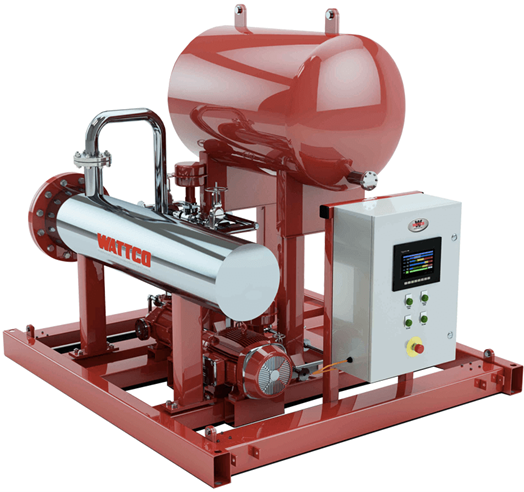
Most of the time it comes down to operating conditions that leave the elements partly or fully exposed while the heater’s still powered. Spot how those situations build up and your maintenance team can catch the risk before anything actually fails.
Low liquid levels in tanks and vessels
This is the usual offender. The liquid evaporates off, a tank starts leaking, the level wanders as production runs, or you keep drawing fluid out without ever refilling. Any of those can quietly drop the level below the elements while the heater carries on as if nothing’s changed.
The heater doesn’t know the liquid’s gone. This is particularly important for tank-mounted flanged immersion heaters, where the heating elements extend into the vessel and must remain fully submerged during operation to prevent overheating and premature failure. It just keeps pouring out heat.
Starting the heater before the tank is filled
Startup is a classic trap. Energise the heater before the tank’s properly full, or flip it on too soon after maintenance or a shutdown, and the elements can be sitting in air for those first critical minutes. Before switching on screw plug heaters installed through a tank wall, confirm that the vessel contains enough liquid to keep the heating elements fully submerged. Skipping this check during startup can lead to dry firing and permanent element damage. It happens most often when someone’s rushing to get a line back up and skips the check that the vessel’s actually filled first.
Incorrect heater installation or positioning
Now and then the fault is built in from the start. Set the heater at the wrong height, choose an immersion length the vessel doesn’t suit, or fit it at the wrong angle, and bits of the element can end up exposed even in completely normal running. No level drop required. With over-the-side immersion heaters, the mounting height, element length, and tank’s normal operating level must be carefully considered to keep the active heating sections submerged, even when liquid levels fluctuate. The install itself left it vulnerable.
Faulty liquid level sensors and safety controls
And then there’s the safety net failing. A level switch that’s packed up, a sensor sitting in the wrong spot, an interlock someone bypassed to save time, or a control system on the blink. Any of these can let a heater run under conditions it should never have been allowed to run in. The protection was there, it just wasn’t working.
What happens when an immersion heater runs dry?
With nothing there to pull the heat off, element temperatures climb fast. The damage rarely stops at the heater either, it tends to ripple out into wider operational and safety headaches.
Overheated elements and premature heater failure
The element itself takes the first hit. Those runaway surface temperatures bring on discolouration, then deformation, then damage to the sheath, and eventually the element simply fails. What might have lasted years can be finished in a single dry-firing event.
Unexpected shutdowns and production delays
The knock-on is where the real cost lives. A failed heater can halt a manufacturing process cold, push up your maintenance bill, and drag you into an unplanned replacement you hadn’t budgeted for. One cheap oversight, a surprisingly expensive day.
How can you prevent immersion heater dry firing?
Just watching the process temperature doesn’t get you there. Real protection comes from pairing proper liquid-level safeguards with a solid install and operating habits nobody’s cutting corners on. Here’s how those pieces fit together.
Install low-liquid-level cutoff protection
This is your front-line defence. A correctly positioned low-level switch, wired to an automatic shutdown interlock, cuts power the moment the liquid drops below the minimum safe line. Done right, the heater physically can’t keep running once the elements are at risk of being exposed.
Use independent overtemperature protection
Add a second, separate layer with a high-limit temperature control. When the normal temperature regulation fails, that high-limit steps in to shut things down. Worth being clear, though, this backs up level protection, it doesn’t replace it. Systems using on-off temperature control panels should have suitable high-limit protection that operates independently of normal temperature regulation. This adds another layer of overheating protection, although it cannot replace a low-liquid-level cutoff. Temperature controls alone won’t catch a dry-firing situation reliably, because the real problem is missing liquid, not just heat.
Make sure heating elements stay fully submerged
Much of prevention is honestly just keeping the elements submerged where they belong. Right mounting position, a sensible minimum immersion depth, tank levels held steady, and a bit of extra care while draining or refilling, since that’s precisely when an element can end up briefly out of the liquid.
Follow proper startup and shutdown procedures
Finally, the human routine. Confirm there’s adequate liquid before you ever energise the heater, and cut the heater’s power before draining a tank or starting maintenance. Two simple habits, and between them they head off a huge share of dry-firing incidents.
Can an immersion heater overheat even when the tank has liquid?
Yes, and this one surprises people. A full tank doesn’t guarantee good heat transfer. Scale building up on the elements, sludge settling around them, poor circulation, trapped air pockets, or an excessive watt density can all cause localised overheating even when the elements look submerged. It isn’t true dry firing, since the liquid’s technically there, but the effect on the element can be just as damaging. The distinction matters because the fix is different, you’re chasing heat-transfer problems rather than a missing-liquid problem.
What should you do if an immersion heater has dry fired?
Don’t just hit the power again and hope. Isolate the equipment safely first, give it time to cool off, and have it inspected before you restart anything. That inspection wants to cover the visible element damage, the state of the sheath, an electrical insulation test, and whatever actually caused the low-liquid condition to begin with. And the firm rule, a heater that’s been dry fired shouldn’t be re-energised until someone qualified has evaluated it. Rushing it back into service is how a bad day becomes a dangerous one.
How regular maintenance helps prevent dry firing?
A little routine attention pays off massively here. Give the liquid-level sensors and safety interlocks a regular check, have a look at the wiring, and keep tabs on tank conditions and heater positioning. The paperwork side counts too, because logging those recurring low-level alarms and genuinely testing that the protective shutdowns fire on cue is how a facility catches a brewing problem while it’s still minor. The failures that blindside a plant are usually the ones the alarms were quietly warning about for weeks.
Final thoughts
Dry firing is, nine times out of ten, a failure you could have stopped. Stay on top of liquid levels, install it correctly, keep the safety controls honest, and you dodge most of it. Knowing the causes and reading the operating risks early is what spares an industrial site the premature heater failure, the costly downtime, and the maintenance that never needed doing. WATTCO supplies industrial immersion heaters and temperature control solutions that can be specified around a range of process requirements, helping businesses keep their heating running dependably.
FAQs About Immersion Heater Dry Firing
Can an immersion heater burn out if it runs without water?
Absolutely, and usually faster than you’d expect. These elements are designed to pass their heat into the liquid around them, so with no liquid there to absorb it, the surface temperature climbs rapidly and keeps climbing. That kind of overheating can do permanent damage in short order. So running one dry, even briefly, is a genuine risk of burning it out for good, not just a minor misstep.
How long can an industrial immersion heater run dry before it fails?
There’s no safe number to quote, unfortunately, and anyone giving you one is guessing. How quickly it fails depends on the watt density, how the element’s built, the operating temperature, and the environment around it. A high watt-density unit can be damaged remarkably fast. The only sensible assumption is that any dry running is harmful, so the goal is zero, not “how much can we get away with.”
What are the warning signs of a dry-fired immersion heater?
A few dead giveaways. Discoloured or warped elements are at the top, and you might also notice a damaged sheath, odd shutdowns, or electrical faults showing up. What counts is the next step, take them as a sign to inspect, not to restart. Switch a visibly affected heater back on and you risk making the damage worse, or opening up a safety issue, so get it looked at first.
Can a dry-fired immersion heater be repaired?
Sometimes, it depends. It comes down to how bad the damage is, how the heater’s constructed, and what the manufacturer advises. Catch it early with minor damage and replacing the heating elements might do the job. But if the sheath or insulation is compromised, you may be looking at replacing the whole assembly. Either way, that’s a call for a qualified evaluation rather than a hopeful restart.
What safety device prevents immersion heater dry firing?
The big one is a low-liquid-level cutoff switch tied to a shutdown interlock, which pulls the power the instant the liquid falls under the safe line and the elements could get exposed. That’s your primary protection. Then, sitting on top of that, an independent high-limit temperature control brings a second layer against overheating. Run the two together and you’ve covered both the cause and the symptom, which is exactly why solid installations fit both.
Can scale buildup cause an immersion heater to overheat?
It can, yes, even with the heater completely under the liquid. Mineral deposits and process residue build an insulating crust on the elements that stops heat passing into the fluid. With nowhere else for that heat to go, it pushes the element’s own surface temperature up and wears the heater out early. So scale deserves respect, because the overheating it brings on looks nothing like dry firing but ends up in the same place.
For maintenance engineers and plant managers in chemical processing, oil and gas, and water treatment facilities, immersion heater dry firing can cause equipment damage, costly downtime, and production delays. WATTCO provides industrial immersion heaters and temperature control solutions to support reliable process heating and reduce overheating risks. Contact us to discuss your operational requirements and find the right heating solution for your facility.