

When should you repair or replace an industrial electric heater?
A heater acting up doesn’t automatically mean it’s finished. That’s the first thing worth saying, because plenty of equipment gets scrapped when a cheap fix would’ve done. The flip side is just as true, though. Keep pouring repairs into a heater that’s genuinely past it and you’re throwing good money after bad. So the real skill here is telling the two apart, and that’s exactly what this guide is for.
Is your industrial electric heater worth repairing?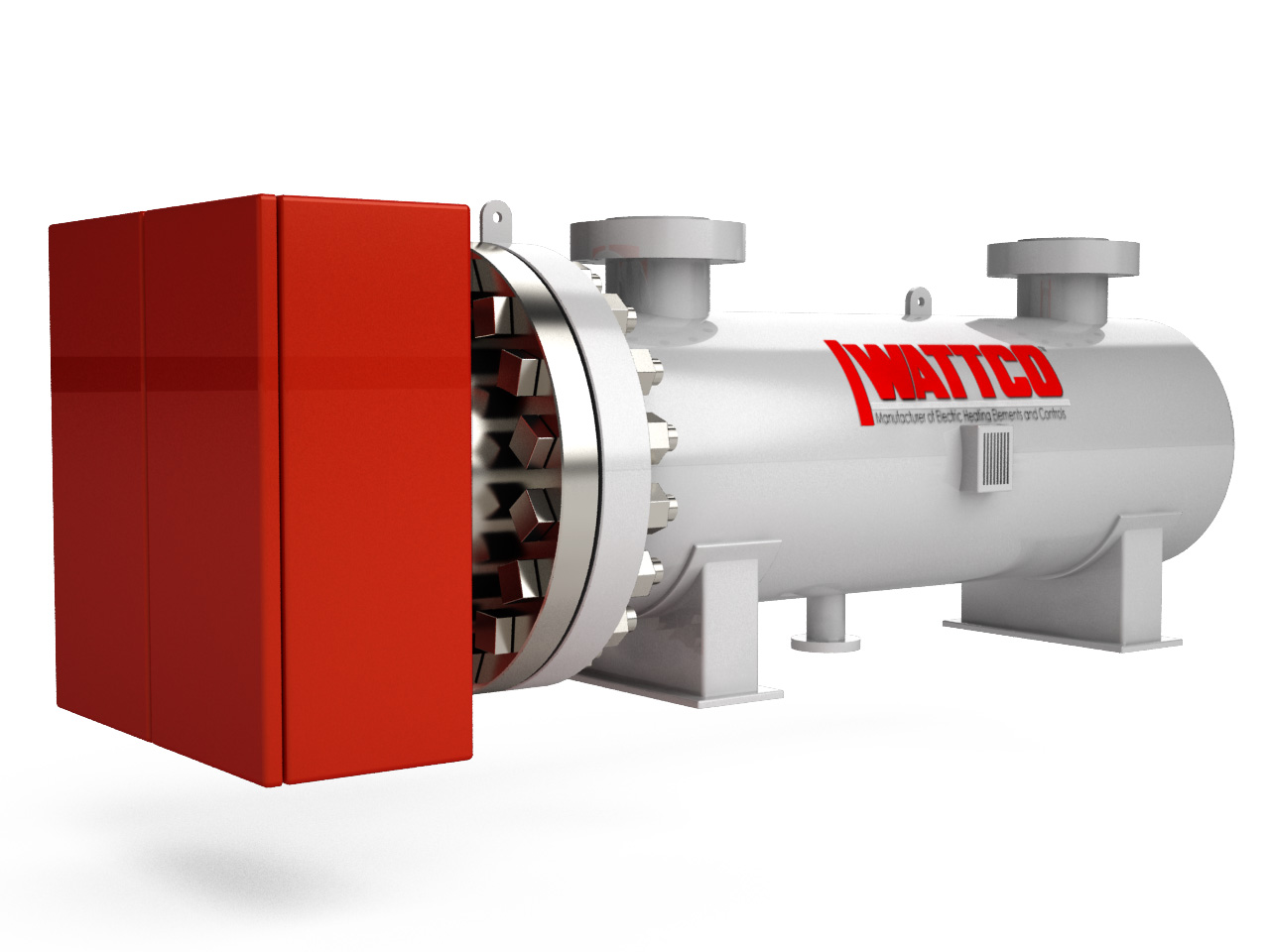
When an industrial heater stops pulling its weight, the cause isn’t always catastrophic. Sometimes it’s a faulty control, a connection that’s worked loose, or a layer of buildup getting in the way of heat transfer.
None of those means the heater’s done for. When industrial immersion heaters start losing performance, the problem could be something as simple as a faulty control, a loose electrical connection, or buildup on the heating elements.
Identifying the actual cause helps determine whether a repair is enough or replacement makes more sense. That’s why step one is always the same, work out what’s actually wrong before you decide anything. Fix the wrong thing, or replace a heater that only needed a new thermostat, and you’ve wasted time and money either way.
Repair or replace an industrial electric heater: What are the warning signs
Heaters tend to grumble before they quit. Catch those early signals and your maintenance team can head off the unexpected shutdown and the production delay that comes with it.
Longer heating times and inconsistent temperatures
One of the first things you’ll notice is the heater slowing down. It takes longer to reach temperature, the heating goes uneven, or it just can’t hold the setpoint the way it used to. In industrial inline heaters, longer heating times or inconsistent outlet temperatures can point to fouled elements, inadequate flow, or faulty temperature controls.
Checking these conditions early can help prevent unexpected process interruptions. Any of that can point to fouled elements, an electrical fault, or temperature controls starting to misbehave. It’s rarely nothing, so it’s worth chasing down.
Frequent electrical trips and heating element failures
When the breaker keeps tripping, or you’re getting ground faults, or elements keep failing, something deeper is usually going on. Insulation breaking down, moisture getting in where it shouldn’t, damaged wiring, that sort of thing. These aren’t faults to keep resetting and ignoring. They’re a sign the equipment needs a proper professional look before it bites you.
Corrosion, leaks, and visible heater damage
Then there’s the stuff you can see. Rust, pitting, a damaged element sheath, a leaking connection, scorch marks from overheating. With visible damage, both the severity and the location matter a lot. A bit of surface rust is one thing. A perforated sheath near the electrical connections is another entirely, and that distinction often decides whether you’re repairing or replacing.
When does repairing an industrial electric heater make sense?
Not every fault calls for a new heater. Repair is often the smart, economical move when the main heating assembly is still in decent shape and the problem lives in parts you can actually get at and service.
Faulty temperature controls or electrical connections
A lot of “heater” problems aren’t the heater at all. A dead thermostat, a failing sensor, a worn contactor, a damaged terminal connection, these can usually be repaired or swapped out on their own, as long as the heater itself is still safe and sound. No reason to replace a whole unit over a part that costs a fraction of it. Sometimes the issue lies in the control system rather than the heating elements. Faulty sensors, worn contactors, or damaged connections in industrial temperature control panels may be repairable or replaceable without changing the entire heater assembly.
Scale buildup and heat transfer problems
Mineral deposits, sludge, and process residue quietly throttle a heater’s performance by getting between the element and the fluid. The encouraging bit is that this is often reversible. Manufacturer-approved cleaning and maintenance can bring the performance back without replacing anything, provided the buildup hasn’t already cooked the element in the process.
Replacing individual heating elements
Some heater assemblies are built with replaceable elements, which is handy. Before you fit new ones, though, a few things need checking. Some industrial heater assemblies allow individual tubular heating elements to be replaced instead of changing the entire unit.
Before installing new elements, check their electrical ratings, sheath materials, and compatibility with the application, along with what caused the original failure. The element compatibility, the condition of the sheath around it, the electrical ratings, and critically, what caused the original failure in the first place. Drop in a new element without sorting the root cause and you’ll just be back here again soon.
When is replacing the industrial heater the better choice?
Some failures are past the point of a tidy fix. Replacement moves to the front of the queue when the damage threatens the heater’s integrity, when repairs simply can’t restore safe operation, or when the thing no longer suits what your process needs.
Severe corrosion or damaged heating element sheaths
This is a safety line, not just a performance one. Cracks, heavy pitting, a perforated sheath, or fluid that’s got into the element can all wreck the electrical insulation. Once that’s compromised, carrying on isn’t really an option, because you’re into genuine safety territory. That’s a replace, not a repair.
Repeated breakdowns despite previous repairs
If you keep fixing the same heater and it keeps failing, listen to that pattern. Recurring breakdowns, constant maintenance call-outs, shutdowns you didn’t see coming, these usually point to something deeper, a design that doesn’t suit the duty, operating conditions it can’t handle, or a material mismatch with the fluid. At that stage, another repair is just delaying the inevitable.
When the heater no longer meets process requirements
Sometimes the heater’s fine and the job changed around it. When production demand increases or fluid properties and operating temperatures change, the existing heater may no longer provide enough heating capacity. Upgrading to appropriately sized industrial circulation heaters can be a suitable option for processes that require continuous fluid heating at specific flow rates and temperatures.
Your fluid composition shifts, production ramps up, operating temperatures move, or the heating demand simply outgrows what the unit was sized for. A heater can be working perfectly and still be the wrong heater for where your process is now. That’s a replacement on capability grounds, not condition.
Repair vs replacement an industrial electric heater: which option costs less over time?
The cheapest option today isn’t always the cheapest option overall. It’s worth weighing the full cost of patching up what you’ve got against buying new, with reliability, ongoing maintenance, and lost production all in the picture.
Compare repair costs with replacement costs
Line the two up properly. On the repair side, add up the replacement parts, the labour, any inspection the repair needs, and be honest about how much service life the unit has left. On the replacement side, factor the new equipment and its installation. A quick comparison helps:
|
Consideration |
Lean toward repair |
Lean toward replace |
|
Main assembly condition |
Still sound |
Corroded or compromised |
|
Failure history |
One-off, clear cause |
Repeated, recurring |
|
Remaining service life |
Plenty left |
Near end of life |
|
Process fit |
Still suitable |
Outgrown the duty |
|
Safety |
Not in question |
Insulation or sheath at risk |
Don’t overlook the cost of industrial downtime?
Here’s the number people forget. Repeated shutdowns, lost production, emergency call-outs, delayed orders, all of that has a price, and it’s often a big one. A string of those can quietly make replacement the cheaper path, even when the repair looks like the bargain on paper. A solid new heater that keeps the line running can pay back its price faster than you’d think, next to an old one that keeps dropping you in it.
What should you check before making the final decision?
Before you approve a repair or raise a replacement order, size up the heater on its real condition, not its age or how rough it’s looking. Get the electrical resistance and insulation properly tested. Take a close look at the element and the sheath. Go back through the maintenance and failure history. Ask whether it still suits the process, and whether parts are even obtainable anymore. And see what the manufacturer has to say. One firm rule runs through all of it, let qualified personnel handle the electrical testing and inspection, working to the applicable specifications and safety procedures. This really isn’t the place to guess.
Final thoughts
Whether you repair or replace turns on a lot more than the heater’s age or its original price. A minor control fault can earn itself a quick, cheap repair, while bad corrosion, one failure after another, or a process that’s outgrown the unit usually tip you toward replacing it. Weigh the condition against the safety, the reliability, and the long-run cost of keeping it going, and the sensible answer generally surfaces on its own. WATTCO supplies industrial electric heating solutions for all sorts of process applications, helping facilities pick replacement equipment that truly fits what they need to heat.
FAQs About Industrial Heater Repair and Replacement
How long does an industrial electric heater typically last?
There’s no fixed number, honestly, and that’s the right answer rather than a dodge. Lifespan rides on the operating temperature, how compatible the fluid is, the watt density, and how well it’s been maintained. A heater run gently and looked after can far outlast one pushed hard in a harsh process. So rather than replacing on a calendar, go by the condition, judged through proper inspection and testing.
Is it cheaper to repair or replace an industrial electric heater?
Depends, and the upfront price is only half the story. A one-off fault on a heater that’s otherwise sound usually makes repair the cheaper route. But if you’re factoring in a short remaining service life, ongoing maintenance, and the downtime of repeated failures, replacement can work out less over time. Add the real cost of lost production into the sum, because that’s often what tips the balance.
Can a damaged industrial heater cause higher energy costs?
It can, yes, though indirectly. Scale buildup, temperature control that’s drifting, and heat losses across the system all push a heater to run longer or harder for the same outcome, and that lands on the energy bill. Worth clearing up one myth though, a working electric resistance element doesn’t quietly get less electrically efficient just because it’s old. The extra cost comes from the conditions around it, not the element ageing.
What tests should be done before replacing an industrial heater?
Start with a visual inspection, then move to the electrical checks, heating element resistance, insulation resistance, and grounding, plus a test of the control system. The important part is that none of those readings mean much in isolation. They have to be judged against the manufacturer’s specifications, by qualified personnel who know what good and bad look like. That’s how you make the repair-or-replace call on evidence rather than a hunch.
Deciding whether to repair or replace an industrial electric heater comes down to equipment condition, safety, and long-term operating costs. WATTCO offers a wide range of industrial electric heating solutions designed for reliable performance in chemical processing, oil and gas, manufacturing, and other industrial applications. Whether you’re replacing a worn-out heater or upgrading to meet changing process demands, choosing the right equipment can help reduce downtime and maintenance costs. Contact us to discuss your heating requirements and find a suitable replacement for your facility.