

What is a Cascade Control Systems and how does it help with heating?
Temperature control can be very difficult in many industries. Any change in the temperature may negatively affect the quality of the product, cause wastage of energy, and even be dangerous. Where process dynamics become complex or where disturbances occur frequently, classical single-loop controllers tend to struggle. The use of Cascade Control provides a better alternative. The cascade control system breaks down the whole control issue into two coordinated levels, making the control of heating more dynamic, robust, and efficient. In this article, we will discuss Cascade Control systems as well as their uses in heating.
What Is a Cascade Control System?
Cascade control systems is a multiple-loop control technique in which the output from one controller, the master controller, becomes the setpoint for another controller, the slave controller. It involves a division of labor between two controllers rather than having just one controller handle the whole process.
The outer loop measures the value of the process variable, which is normally the ultimate outlet temperature or the temperature of the substance undergoing heating. The inner loop, on the other hand, measures an intermediary parameter that could be the temperature of the heat carrier, whether steam, hot oil, or combustible gas. The master controller gives a setpoint to the slave controller, which responds quickly and eliminates disturbances before they can even affect the process.
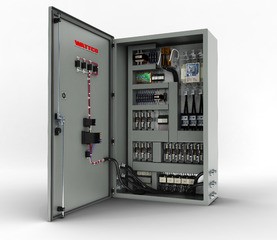
How Cascade Control System Works: The Basic Mechanism
Cascade control system operation involves certain steps. In this case, the primary controller will constantly monitor the process variable and compare it with the required setpoint. The deviation will lead to a certain output signal from the primary controller. This signal will not be used directly in the actuation; instead, it will become a setpoint for the secondary controller.
In turn, the secondary controller monitors its process variable, which is usually an intermediate one. It is closer to the point of disturbances, and its comparison with the setpoint provided by the primary controller will result in the manipulation of the final control element.
An easy-to-understand example: imagine that a chef (primary controller) asks an assistant (secondary controller) to keep the stove at a certain temperature. The assistant will adjust the burner directly, reacting instantly to any air draft or changes in gas pressure. Therefore, the chef does not have to worry about maintaining the required temperature during the preparation of the dish.
Cascade Control vs Single-Loop Control
Single loop control involves a controller controlling one manipulated value and measuring the value of a process. It suffices well in handling processes where there are no significant disturbances. However, one major drawback associated with it is its response to disturbances in the process after their impact on the primary process. The disturbance has already led to some sort of problem such as high temperatures or overshoots.
On the other hand, Cascade Control involves catching up with these disturbances as they arise in the secondary (inner) loop thus giving it ample time to handle them before they cause more trouble in the primary loop. In heating processes where the common disturbances include load variation, changes in fuel pressure, and heat exchanger fouling among others, it is essential to handle them before they affect the process. Consequently, there is better control of temperature deviations.
|
Feature |
Cascade Control |
Single-Loop Control |
|
Reaction to disturbances |
It responds faster because the secondary loop detects changes first, before the main process gets affected |
It responds a bit more slowly, because it only reacts after the main process variable changes |
|
Setup complexity |
More complex due to two control loops and additional sensors |
Simpler with only one controller, and just one feedback loop |
|
Cost |
Higher initial setup and tuning cost |
Lower installation and maintenance cost |
|
Best use case |
Best for industrial heating systems that have lots of perturbations and also really high accuracy demands |
Best for simple processes under stable operating conditions |
Components of Cascade Control Systems
A Cascade Control system in a heating application typically consists of the following components:
- Sensors and Transmitters: Two sets of sensors are required — one for the primary process variable (e.g., product outlet temperature) and one for the secondary variable (e.g., steam temperature or jacket temperature). These transmitters convert physical measurements into signals for the temperature controllers.
- Primary Controller: Controls the major process variable and sends the set point signal to the secondary controller. It is usually a PID controller with slow response.
- Secondary Controller: Gets its set point from the primary controller; it controls the intermediate process variable and controls the final control element. It is usually faster in response.
- Final Control Element: Is a control valve (controlling the flow of steam, fuel, or hot water) or is a burner modulating the combustion process.

Cascade Control in Heating Applications
Cascade control system has found extensive applications in a variety of heat-intensive industries:
-
- Furnace Industry: In metal heat treatment furnaces, the outer loop is used for controlling the load temperature, and the inner loop for controlling the furnace atmosphere or radiant tube temperature so as to avoid over shooting and any possible metallurgical problem in the heated part.
- Steam Boilers: In steam boiler heaters, Cascade Control uses the outer loop to monitor steam pressure or temperature while the inner loop controls the firing rate or feed water.
- Heat Exchanger Applications: The first loop manages the process fluid outlet temperature, while the second loop manages the heating fluid (either steam or hot oil) inlet temperature.
- HVAC System Applications: In commercial buildings, Cascade Control regulates the zone air temperature through supply air temperature control.
- Chemical and Pharmaceutical Process Heating Applications: Jacket reactor temperature control utilizes Cascade Control loops to maintain strict reaction temperature control.
Find the Right Heating Solution for Your Application
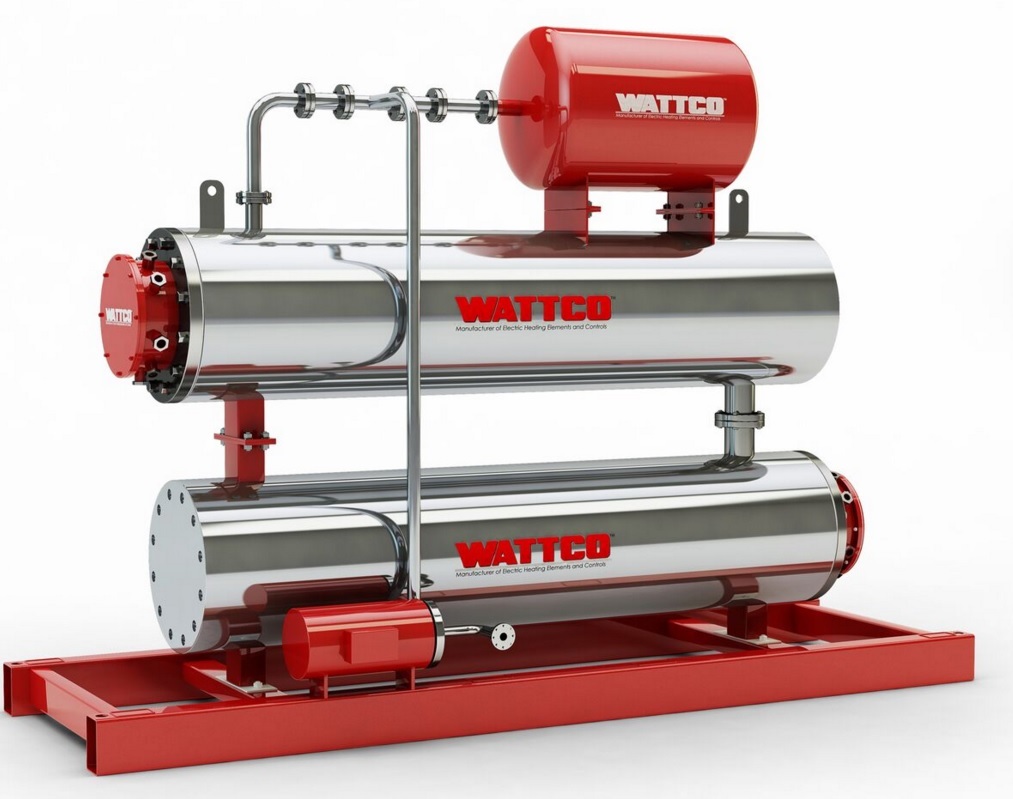
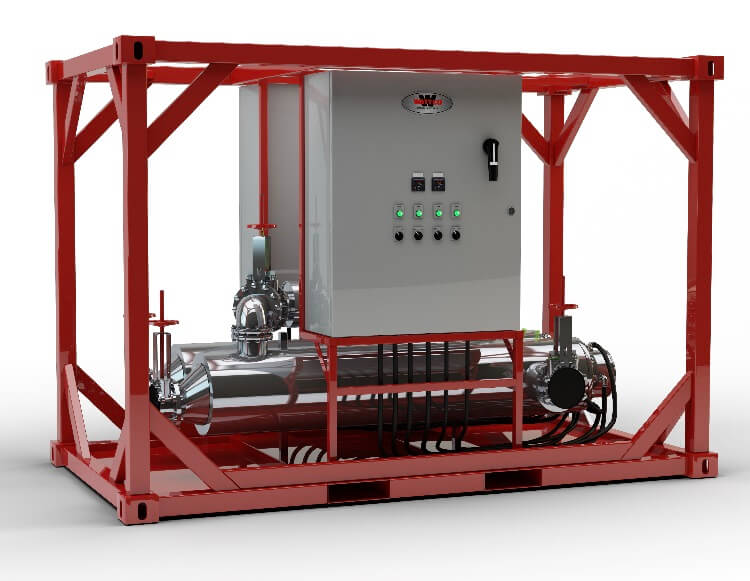
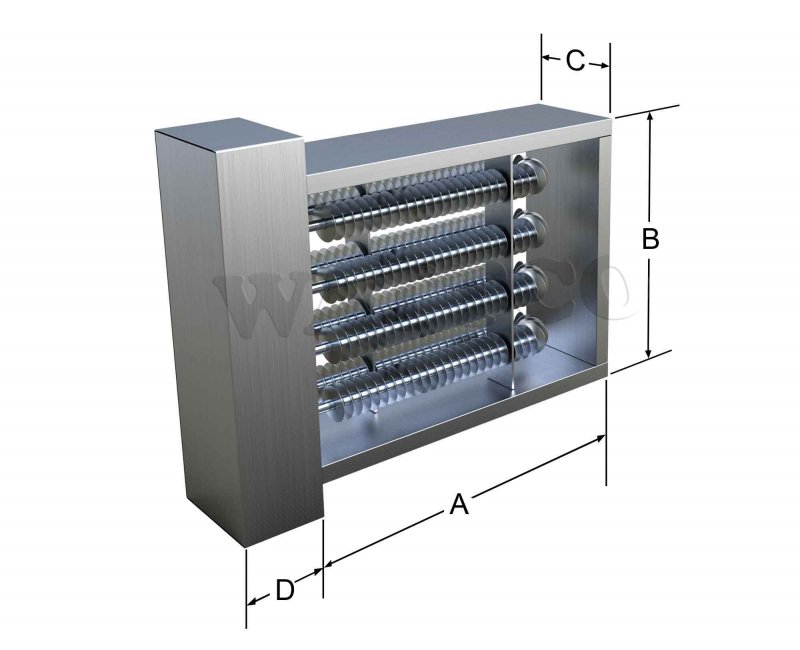
Implementation Strategies for Cascade Control Systems
For obtaining the maximum potential from a Cascade Control system in a heating application, the following tips apply:
- Selection of Appropriate Secondary Variable: The selected secondary variable should be measurable, respond faster than the primary variable and have direct effects by the manipulating variable. In most heating applications, the secondary variable should be heating media temperature.
- Proper Tuning of Inner Loop: Tuning of the secondary control system must take place first before switching on the outer loop. Trying to tune both loops at the same time results in chaos.
- Placement of Sensors: Secondary sensors should be installed closer to the source of disturbances. Otherwise, it would reduce the effect of the inner control system.
- Matching of Controllers’ Modes: In most applications, the two controllers operate in PID mode. The inner controller has higher proportional action compared to the outer controller.
Table: Showing the Basic Cascade Controller Tuning Steps
|
Step |
Loop to Tune |
Why It Matters |
|
Step 1 |
Inner Loop |
Ensures faster disturbance correction and creates a stable base for the cascade system |
|
Step 2 |
Outer Loop |
Helps maintain accurate overall process temperature after the inner loop becomes stable |
|
Step 3 |
Final Adjustment |
Improves system stability, response time, and overall heating performance under different operating conditions |
Conclusion
Cascade control represents a significant leap from simple single-loop controllers if accurate and timely control of the heating system is necessary. As a result of the division of the control system into two loops – one internal and one external, any disturbance in the system will be identified sooner, reducing the changes in the temperature in addition to improving energy efficiency without using expensive machinery. Despite the higher degree of proficiency required for tuning such a controller, the improved stability of the process and temperature is sufficient justification for implementing Cascade Control in heating systems.