

Wattco experts deliver engineered guidance and customized heat exchanger tubing solutions using proven, high-quality products. From system selection to performance optimization, we ensure safe operation, energy efficiency, and long-term reliability across industrial applications. Contact us today to connect with our specialists and receive solutions tailored to your process needs.
Heat Exchanger Tubing: Types, Working and Industrial Uses
Heat plays a central role in most industrial & commercial applications. Fluids are constantly heated, cooled, condensed, evaporated, or held at a specific temperature to ensure that all equipment operates properly. Heat Exchanger Tubing makes that possible. Heat Exchanger Tubing is located inside boilers, condensers, power plants, refrigerators, oil refineries, chemical plants, food processing plants, desalination plants, and heating, ventilating, and air conditioning units, among other pieces of equipment.
Despite the apparent simplistic design of metallic tubes as heat exchanger tubes, these tubes are complex engineered products that are meant for effective heat transfer under extreme mechanical, thermal, and chemical loading conditions.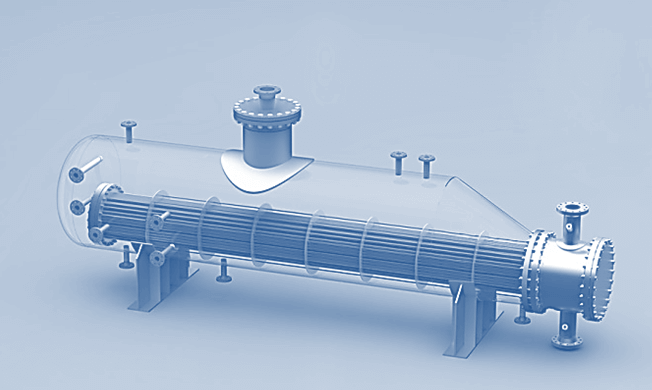
What is a Heat Exchanger Tubing?
Heat exchanger tubing basically means that metal tubes are placed inside a heat exchanger, and they transfer heat between two separate fluids without them actually mixing. In a practical sense, these tubes matter a lot for heating, cooling, condensation, and different industrial process needs.
The tubing is important because it really decides how well heat gets moved, also how the pressure gets managed, how resistant it is to corrosion, and how the whole equipment performs in general. Picking the right tube helps with durability, better energy efficiency, and reliable operation over time, especially in industrial work that can be pretty demanding.
Heat Exchanger Tube Materials: Which One Should You Choose?
Picking the appropriate heat exchanger tube material is pretty much a yes, depends on the operating temperature (which is usually the big one), plus how much corrosion it sees, the fluid type, the pressure setup and also what kind of maintenance you can actually manage. Various materials offer different durability behavior, heat transfer aptitude, and chemical resistance traits, so for industrial use, you end up choosing one option over another based on what fits the process best.
Table: Heat Exchanger Tube Material Comparison
|
Material |
Corrosion Resistance |
Max Temperature |
Relative Cost |
Best Applications |
Ease of Welding |
|---|---|---|---|---|---|
|
Stainless Steel 304 |
Good corrosion resistance |
Around 870°C |
Moderate |
General industrial heating and water applications |
Good |
|
Stainless Steel 316 |
Better corrosion resistance than 304 |
Around 925°C |
Moderate to high |
Marine, chemical, and corrosive environments |
Good |
|
Copper |
Excellent thermal conductivity but lower corrosion resistance |
Around 260°C |
Moderate |
HVAC, refrigeration, and low-temperature heat exchangers |
Easy |
|
Titanium |
Excellent corrosion resistance |
Around 600°C |
High |
Seawater, chemical processing, and harsh environments |
Moderate |
|
Hastelloy |
Extremely high corrosion resistance |
Around 1000°C |
Very high |
Aggressive chemical and high-temperature industrial applications |
Difficult |
Standard Sizes and Dimensions
Heat exchanger tubes get made in a range of dimensions and wall thicknesses depending on the pressure limits, how much heat transfer is needed, and the actual industrial use, that kind of thing. Bodies like TEMA ( Tubular Exchanger Manufacturers Association ), as well as ASME, also step in so the tube sizing stays proper, and so safety plus operational consistency is kept across the heat exchanger units.
Table: Common Heat Exchanger Tube Dimensions
|
Tube Outer Diameter |
Common Wall Thickness |
|---|---|
|
1/4 inch |
0.020–0.035 inch |
|
1/2 inch |
0.035–0.049 inch |
|
3/4 inch |
0.035–0.065 inch |
|
1 inch |
0.049–0.083 inch |
|
1 1/4 inch |
0.065–0.095 inch |
How to Pick the Right Tubing for Your Application?
Picking the right heat exchanger tubing kind of depends on operating temperature, the pressure situation, plus what the whole system really needs. The tubing material should be able to survive the needed heat level and the pressure demands, without messing with system performance or safety.
Also, corrosion resistance really matters, along with fluid compatibility. Different liquids, chemicals, and even changing environmental conditions can end up changing tube durability, the heat transfer efficiency, and that long term reliability we usually want in industrial applications.
You should think about maintenance and cleaning before settling on a tube design or material, too. If the use case has regular inspection or frequent cleaning, then tubing configurations that make access easier can help, and they can cut down on downtime, in practice.
Fouling and Corrosion: How to Protect Your Tubes
Fouling and corrosion can really cut down heat transfer efficiency, push up the pressure drop, and end up shortening the lifespan of the heat exchanger tubing. With the right material choices, plus regular cleaning and keeping an eye on fluid quality, you can help shield the tubes and keep the system running reliably.
Table: Fouling Resistance by Fluid Type
|
Fluid Type |
Fouling Risk |
Recommended Tube Material |
|---|---|---|
|
Water |
Moderate due to scale and mineral buildup |
Stainless Steel 304 or 316 |
|
Steam |
Low to moderate, depending on water quality |
Stainless Steel 316 |
|
Oil |
High due to residue and sludge formation |
Carbon Steel or Stainless Steel |
|
Chemical Fluids |
High, depending on chemical composition |
Titanium or Hastelloy |
Shell-and-Tube Configurations Explained
Shell-and-tube heat exchangers are basically a bundle of tubes set inside a bigger outer shell, so heat can move between two separate fluids. Usually, one fluid is pushed through the tubes, while the second fluid winds around the tubes, still inside that outer shell.
How the tube-side flow meets, and how the shell-side flow is arranged (like the path it takes), can strongly change the heat transfer efficiency, the pressure drop, maintenance needs, and the overall system behavior. Choosing the right layout, or the proper configuration selection, helps boost the thermal output and also supports reliable industrial heating and cooling work.
How does Heat Exchanger Tubing work?
Heat exchanger tubing works based on basic thermodynamics: heat always flows from a hotter region to a cooler one. In heat exchangers, this natural direction of heat flow is deliberately controlled. The operating sequence typically follows these steps:
- Two fluids of different temperatures enter the heat exchanger system.
- One fluid flows inside the tubes.
- The other fluid flows outside the tubes or through adjoining channels.
- The temperature difference drives heat to move through the tube wall.
- The colder fluid absorbs heat while the hotter fluid loses heat.
- Both fluids exit the exchanger at new temperatures.
The overall rate of heat transfer depends on the thermal conductivity of the tube material, tube length, number of tubes, wall thickness, fluid velocity, turbulence levels, and temperature difference between the fluids
Three heat transfer modes occur simultaneously:
- Conductionthrough the tube wall
- Convectionbetween the tube surface and the flowing fluids
- Radiation(usually minor unless extremely high temperatures are present)
Many systems are purposely designed to promote turbulence because turbulent flow increases mixing and heat transfer compared to laminar flow. The system designer balances heat transfer efficiency with acceptable pressure drop, resistance to fouling, cost of material, and ease of manufacturing and maintenance.
Types of Heat Exchanger Tubing
Heat exchanger tubing can be categorized in several ways: by heat exchanger design, tube geometry, or material type. Below are the primary classifications used in practice.
Shell-and-Tube Heat Exchanger Tubing
This is the most widely used configuration. A bundle of tubes is enclosed in a cylindrical shell. This is where one fluid flows inside the tubes and the second fluid flows outside the tubes, within the shell. Baffles are often installed to direct flow and create turbulence to improve heat transfer.
Shell-and-tube Tubing
It is used because it handles high pressures, tolerates high temperatures, can be easily cleaned or replaced, and allows large heat transfer areas. It is the standard choice in oil refineries, power plants, gas processing, and heavy industry.
U-Tube Heat Exchanger Tubing
U-tubes are bent into a curved U-shape so both ends connect to the same tubesheet. The advantage of this type of tubing is that it has excellent tolerance of thermal expansion, a compact layout, and is suitable for large temperature gradients. They are common where operating temperatures change frequently or where thermal stress needs to be minimized.
Finned Heat Exchanger Tubing
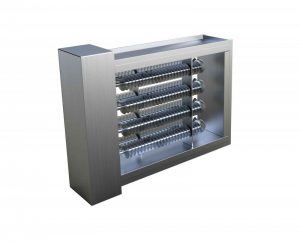
Finned tubular heating increase the external surface area of the tubing, improving heat transfer when one fluid is a gas. These are also found in different types, like longitudinal fin tubes, helically wound fin tubes, and serrated fin tubes. These are widely used in air coolers, radiators, and heat recovery units. Because gases transfer heat less efficiently than liquids, fins create additional area to compensate.
Double Pipe Heat Exchanger Tubing
This type of tubing involves two concentric tubes-the inner tube carries one fluid and the annular gap carries the second fluid. It is simple and robust, tolerates high pressures, and is typically used for smaller heat duties or highly viscous fluids.
Importance of the Heat Exchanger Tubing
Heat exchanger tubing is vital to modern industry for several reasons.
- Energy Efficiency: Proper heat transfer reduces energy waste, fuel consumption, and operating cost. Industries use rejected heat from one process to heat another stream instead of wasting it.
- Process Safety: Temperature control prevents thermal runaway reactions, freezing of lines, overpressure caused by vaporization, and equipment failure. In critical sectors like chemical processing or power generation, safe operation depends directly on heat exchangers working correctly.
- Product Quality: Heat tracing serves to keep the surface temperature above the ambient dew point to prevent condensation on any equipment, such as in storage tanks and switchgear cabinets. In many processes, temperature directly affects chemical reaction rates, crystallization or polymerization behaviour, food safety and sterilization, and pharmaceutical purity. Incorrect temperatures can ruin entire production batches.
- Environmental Impact: An efficient heat transfer process has the effect of decreasing the emissions of greenhouse gases, the use of cooling water, fuel, as well as the discharge of waste heat. Energy recovery by heat exchangers is the backbone of sustainable industrial production.
- System Reliability and Longevity: Good heat exchanger tubing is non-corrosive and prevents the problem of leaks and fouling. This ensures that no plant is shut down.
Where is Heat Exchanger Tubing Used?
Heat exchanger tubing is used across a very broad range of industries because nearly every industrial process involves fluids that must be heated or cooled. Some of the main sectors that use Heat exchanger tubing are:
- Oil and Gas Industry: It is fundamental for crude oil heating, natural gas dehydration, refinery fractionation systems, LNG liquefication and regasification, and heat recovery systems.
- Chemical and Petrochemical Processing: It is used in this industry for reactor temperature control, distillation column condensers and reboilers, polymerization processes, and ammonia and methanol production since reactions are highly temperature dependent and corrosion from chemicals requires resistant materials.
- Power Generation: Heat exchanger tubing is used in steam condensers, feedwater heaters, nuclear steam generators, and geothermal plants.
- HVAC and Refrigeration: Heat exchanger tubing is present in chillers, evaporators, air conditioning coils, and heat pumps
- Food and Beverage Processing: Tubing is used in milk pasteurization, beverage chilling, sterilization, brewing, and fermentation cooling because product temperature affects taste, safety, and shelf life.
- Desalination and Marine Systems: Tubing is used in seawater desalination evaporators, marine engine coolers, and brine heaters.
- Pharmaceutical and Biotechnology: It is used for reactor jackets, bioreactor cooling loops, WFI (water for injection) heating, and cooling.
Common Problems and How to Spot Them Early?
Over time, heat exchanger tubing can start to show performance problems because of fouling, corrosion, leaks, or just overall reduced heat transfer efficiency. Catching these issues early (like pretty soon) matters, since it helps avoid equipment damage, energy waste, and those annoying high-cost system downtimes that hit industrial operations.
Tube fouling often comes from scale, sludge, or residue buildup inside the tubes. You can usually notice it when flow rates drop a bit, pressure drop starts rising, and the heating or cooling performance looks weaker than expected during normal operation.
Corrosion might show up as rust, odd discoloration, thinning tube walls, or contamination in the fluid itself. Also, leaks, plus sudden pressure loss, can be a giveaway that tubes are damaged or seals are failing. When heat transfer efficiency keeps slipping, it’s commonly tied to blocked flow paths, fouling, or even material degradation happening somewhere inside the whole heat exchanger setup.
Conclusion
Heat exchanger tubing might seem no more complicated in design than an assortment of metal tubes packaged into bundles, but it is actually one of the most essential elements utilized in all operations related to many kinds of industries. Power generation, chemical production, refrigeration, oil refining, food processing, desalination, and many other industries are supported by the controlled, effective, and safe transfer of heat between fluids, which makes it possible.
Heat can be safely and effectively transferred from one fluid to another thanks to this technology. A heat exchanger tube is essentially a fluid separator that allows heat to move between the separated fluids while withstanding pressure, temperature, corrosion, and vibration. It is designed with heat-transfer-optimized materials and shapes that promote sustainability and energy efficiency. It safeguards process dependability, product quality, and safety. It becomes clear how important this “simple” component is when one understands how it functions and where it is used. Heat exchanger tube research and development can only grow in importance as the world’s industries strive for increased efficiency and a smaller environmental impact. A heat exchanger tube may appear unremarkable, but it is an essential component of modern industrial society.