

All about Thermal Loops: Key Components, Advantages, and their Industrial Applications
There is a gap between the things engineers talk about at conferences and the things that actually keep industrial processes from falling apart. Thermal loops sit firmly in the second category. You will not find them on the cover of trade magazines. They do not get keynote sessions. But pull apart almost any precision manufacturing process, in semiconductors, pharmaceuticals, food production, oil and gas, aerospace, and somewhere inside it, doing quiet and thankless work, is a thermal loop.
It is actually not very technical. A thermal loop is nothing more than an automated heating and cooling process that detects its target temperature and makes adjustments accordingly. It is all done automatically, cycle after cycle. Thermal loops have been around for a while now. Your household thermostat is a thermal loop. What is new is the complexity of what happens in the loop, as well as the results if it goes wrong.
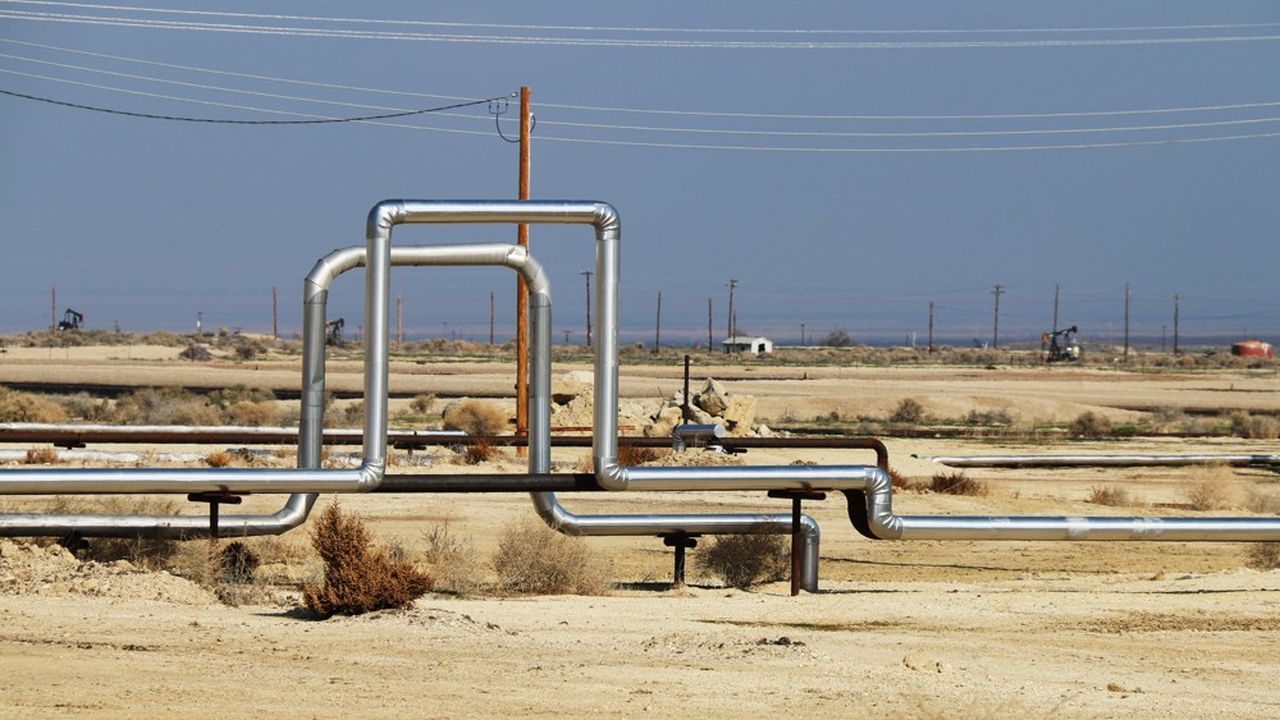
Why Do We Call It a Thermal Loop in the First Place?
The loop is something different. It is what those parts become when they are connected into a system that feeds information back into itself continuously. The sensor reads the temperature. The controller compares that reading to where the temperature should be. The power controller adjusts the energy going to the heater. The heater responds. The sensor reads again. The whole cycle repeats, in some systems hundreds of times per second, for as long as the process runs.
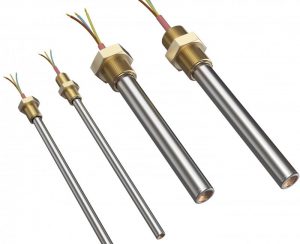
What Is Actually Inside One of These Systems?
Four elements. They are not complicated on their own. The complexity comes from how they are chosen and how they talk to each other.
The temperature sensor is the system’s sense of reality. Industrial processes typically use one of two types. Thermocouples handle wide temperature ranges and survive harsh environments, which makes them common in metal treatment and oil and gas applications. RTD or resistance temperature detectors provide greater precision at medium temperatures. These are more common in areas like pharmaceuticals and food processing, where there could be some margin of error due to regulation. Just as important as which kind of sensor one uses is where the location of that sensor is, as a sensor placed too far away will record an old temperature.
The power controller comes between the process controller and the heater. In precision applications this is handled by solid-state relays or silicon-controlled rectifiers because they respond fast enough to act on instructions from a PID controller without introducing lag. Newer SCR units include predictive load management, which means they start anticipating power demand rather than just reacting to it.
The process controller is the brain. In most serious industrial applications this is a PID controller, proportional integral derivative. The name describes three separate calculations it runs simultaneously. How far is the temperature from the set point right now? How fast is it moving? Has it been consistently off over time? By running all three, a PID controller can hold a process temperature steady without the swings that simpler on/off systems produce. A basic on/off controller might let temperature swing 10 degrees above and below the target. A tuned PID system holds within a degree, sometimes less. For processes where a few degrees is the difference between a good batch and a failed one, that is not a small thing.
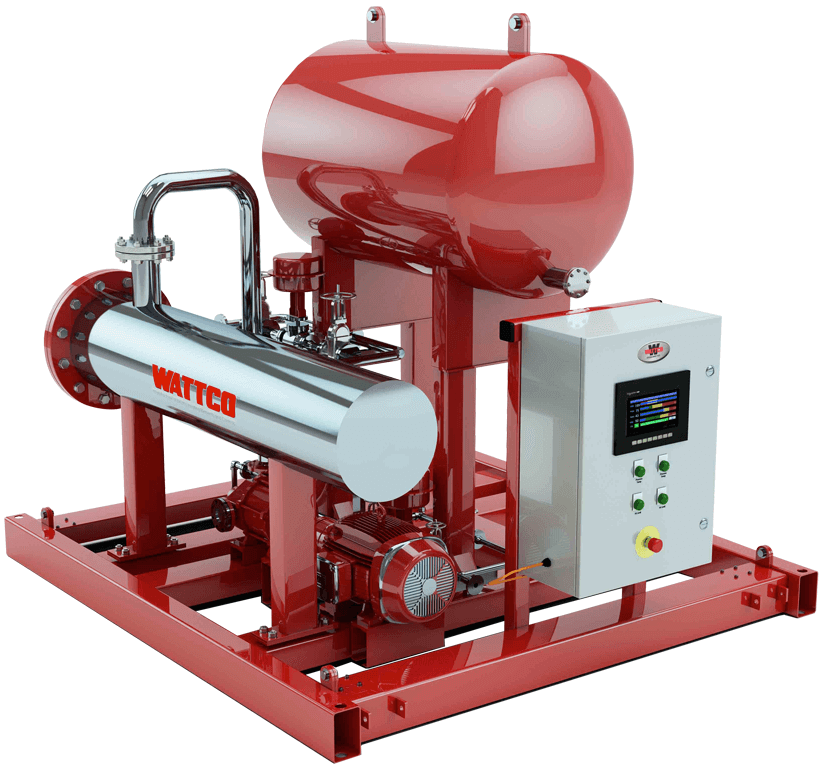
Key Components of Thermal Loops
Thermal loops are helping industries keep temperature regulation, accurate and steady, across different devices and equipment. The way they work is pretty much by measuring, then controlling, then adjusting heat again and again, so the whole setup runs with better efficiency, safety, and smoother performance in industrial plus commercial settings.
The main parts of a thermal loop system are:
- Temperature Sensor (Sensing): A temperature sensor figures out the real temperature of the process and then sends that info over to the controller. Thermocouples and RTDs are common examples, they help with careful monitoring, so the system can react fast and hold a steady temperature condition.
- Process Controller (Control): The controller compares what it measured versus the temperature setpoint that’s desired. Then it figures out how much correction, or adjustment, is needed. A lot of setups lean on PID based control, mainly to sharpen temperature accuracy, cut down on swings, and keep system performance efficient.
- Power Controller/Relay (Regulation): This deals with the electrical power going to the heating or cooling hardware. It takes the directions from the controller, then moves how much energy that is really sent through, so the temperature control stays steady across the whole run.
- Heater/Thermal Source (Heating/Cooling): The heating source, or the cooling source, is what actually adds or removes thermal energy. It pushes the system toward the target temperature and supports the thermal loop to run in a smooth and energy-smart way.
- Data/Electrical Supply: The electrical supply gives the power required to operate everything in the thermal loop. On top of that, data handling systems support monitoring of performance, trending efficiency, and improving temperature control through continuous process review, then tuning and optimization.
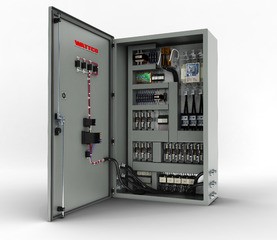
Advantages of Thermal Loops
Thermal loops are kind of getting more important in modern industrial and electronic systems because they back up temperature management that’s more accurate, and also help the equipment run in a more efficient way. In practice, these systems let industries increase energy efficiency, keep hardware safer, and keep things steady during heating and cooling tasks that can be different day to day.
They also bring several big advantages, like:
- Precise Temperature Control: Thermal loops help you keep temperatures accurate and stable, you know, because the temperature control systems are doing their job, like PID controllers. That kind of tight precision tends to lift product quality, make process outcomes more uniform, and improve operational efficiency in industrial use, overall.
- High efficiency and long-term sustainability: Thermal loops help reduce wasted energy losses, and yes, they also make heating/cooling behavior feel more responsive. A bunch of setups can take advantage of renewable energy inputs too, so industries can steer sustainability targets, while also dialing down energy use during everyday operations without much fuss.
- High power density management: Thermal loops handle high power density systems well, especially in electronics and other more advanced equipment. Their adaptable design supports intricate packaging approaches, and even while the surroundings are harsh, thermal performance stays steady, which is kinda the whole point.
- Superior Thermal Management: thermal loops often provide stronger heat transfer compared with older solutions like traditional heat pipes. They can shift heat efficiently even when it’s basically “fighting” gravity, and that helps equalize temperatures, so the overall cooling ends up more effective.
- Reliability and Low Maintenance: Closed-loop thermal designs reduce the likelihood of environmental issues, like outgassing or leakage. Then the durable engineering adds to it, so there’s less servicing, downtime drops, and long-term reliability usually improves.
- Structural Safety: Thermal systems often rely on expansion loops, which cut down the stress created by heat expansion, along with vibration and even pipe misalignment. This kind of safeguard is important because it helps keep damage away, improves piping safety, and stretches the service life of industrial equipment overall.
- Enhanced Integration: Thermal loops can plug into newer electronic cooling methods and Industry 4.0 style technologies with less resistance. The result is real-time monitoring, tighter automation, and better process control for modern industrial operations, so everything runs smoother than older approaches.
Industrial Applications of Thermal Loops
Thermal loops are pretty widely used in industries, mostly for holding temperature control steady, improving energy efficiency, and making sure the operations stay safe. In practice these systems do a lot of quiet work, like assisting plants manage heat, chill, and everything in between, while still clinging to product quality, equipment performance and general operational trustworthiness across a variety of applications. They sort of work in the background, but they make a difference.
Some of the big industrial uses for thermal loops are these:
- Semiconductor Wafer Manufacturing: Thermal loops sort of help keep temperatures steady inside semiconductor process chambers, plus other special gear. They do heating and cooling for gases and chemicals, too, so makers can hold precision better and push wafer output quality up a notch.
- Heat Treatment and Materials Processing: Thermal loops tend to support more even heating and a calm, controlled cooling cycle during metal work, like hardening and tempering. With improved temperature handling, industries can keep strength and durability, while meeting industrial quality requirements without getting things kinda messy.
- Oil and Gas Processing: Thermal loops get used for warming industrial fluids, managing reactor temperatures, and even controlling fluid viscosity across pipelines. They can raise energy efficiency, keep processing flowing smoothly, and support dependable performance when the conditions get rough.
- Electronics Cooling (Passive and Active): Loop heat pipes and thermosyphons, assist cooling for high performance electronics such as CPUs, GPUs, LEDs, and avionics systems. Heat moves efficiently without leaning on too many moving parts, which often makes cooling more dependable and can extend equipment service life a bit.
- Chemical and Pharmaceutical Processing: Thermal loops back accurate reactor temperature control, compound heating, and sterilization steps in pharma production. This careful temperature management helps protect product consistency, safety, and process efficiency when it matters most.
- Food and Beverage Production: Thermal loops show up during pasteurization, sterilization, cooking and a bunch of other steps in food processing. If the temperature control is done right, it actually supports food safety, maintains the product quality, and keeps production standards more consistent from one plant to another, more or less.
- Energy and HVAC Systems: Thermal loops are also used for reclaiming waste heat from industrial setups, and that heat is reused for heating, ventilation, and air conditioning work. They can further help with dehumidification and air pre cooling, plus run energy saving routines across different industrial HVAC layouts.
- Aerospace and Defense Applications: Loop heat pipes are used in spacecraft, satellites, and aircraft systems to handle thermal loads and prevent overheating. They also support anti icing work on aircraft, and help keep performance steadier in nasty environmental conditions.
- Industrial Piping Systems (Expansion Loops): Expansion loops are installed in steam and hot water pipelines to absorb thermal expansion when temperatures fluctuate. This helps reduce stress on the piping, while a pipe heater can support consistent temperature control and lower the risk of cracks, leaks, and structural damage in industrial facilities.
Is This Really That Different from Just Having a Good Heater?
Yes, and the difference shows up most clearly when conditions change.
A good heater delivers consistent power. That is useful if the material being heated, the ambient temperature, the flow rate, and the load all stay constant. They rarely do. A batch changes weight partway through a run. An external temperature drops overnight. A pump slows slightly. In each of these situations, a heater with no feedback loop keeps doing what it was doing. A thermal loop notices the change and compensates before the process drifts outside specification.
The energy argument is also worth taking seriously. Integrated thermal loop systems, where sensing, control, and heating are designed together rather than bolted together from separate procurement decisions, have shown energy savings that consistently run above 10% compared to conventional heating setups. That number comes from the same principle: applying exactly as much energy as the process needs at any given moment, rather than running at a fixed output and hoping it averages out.
In regulated industries the case is even more direct. Pharmaceutical manufacturers operating under FDA 21 CFR requirements, aerospace suppliers following AMS2750 pyrometry specifications, and automotive heat treaters working to CQI-9 standards all need documentation that their thermal processes ran within the required parameters, across every cycle, with timestamps and audit trails. A thermal loop with proper data management produces this automatically. A collection of unconnected components does not.
Where Do These Systems Actually Show Up and What Are They Doing There?
Semiconductor manufacturing is probably the most demanding environment thermal loops operate in. Wafer processing involves deposition chambers, annealing furnaces, and etching equipment that must hold temperature uniformity across a substrate to tolerances measured in fractions of a degree. A variance that would be irrelevant in most industrial processes here produces wafers that cannot be corrected or recovered. The thermal loop is not a nice feature in this setting. It is what makes the process physically possible at the required quality level.
Food and beverage production relies on thermal loops for pasteurization and sterilization in ways that go directly to product safety. Milk pasteurization requires a product to reach a defined temperature for a defined time. Too low and pathogens survive. Too high and the product quality deteriorates in ways that are commercially significant. The thermal loop holds the process where it needs to be, not approximately, and it does this across every batch, regardless of variation in incoming product temperature or ambient conditions.
Thermal loops in oil and gas processes control the temperatures of fluids inside pipeline, separation, and heat exchange units where viscosity, phase behavior, and chemical reactions are dependent on temperature. Thermal loops in the oil and gas industry are incorporating PID control in conjunction with remote data acquisition systems, enabling the operators to monitor and analyze thermal performances of the process over time and detect any malfunction. Medium voltage electric heaters, running on a maximum of 7200 volts, are increasingly common for industrial oil and gas heating operations, making the use of step-down transformers less necessary.
Heat treatment for aerospace and automotive applications requires stringent thermal performance and recording criteria to comply with AMS2750 and CQI-9 standards. Both standards require documentation of temperature uniformity within the heat-treated work zone and regular system surveys to ensure temperature uniformity. If thermal loops fail to provide accurate temperature measurements in the form of documentation, they simply cannot comply with the standards set by AMS2750 and CQI-9, thus becoming useless in such environments.
Medical device sterilization and pharmaceutical batch processing are regulated environments where the thermal record of a process is as important as the process itself. The data management component of a modern thermal loop, logging sensor readings, flagging deviations, and maintaining an unbroken record of the run are not optional features in these settings. It is part of what the thermal loop is.
What Has Actually Changed About Thermal Loops Recently?
The hardware has improved, but the bigger shift is in how the data is used.
For most of the history of industrial temperature control, the information a thermal loop generated stayed local. A chart recorder printed a paper trace. An operator checked it at the end of a shift. Anomalies that had already happened got documented. The response was always retrospective.
Modern integrated thermal loop systems change that relationship. Sensor data flows continuously into analytics platforms that can identify drift patterns, predict maintenance requirements, and flag process deviations in real time. An engineer sitting in an office can see what is happening in a heat treatment furnace, or a pipeline heater, or a pharmaceutical reactor and respond while the process is still running.
The modular design of current systems also means this capability does not require replacing everything at once. A facility can update its control layer, or its data management layer, or its sensing components independently, integrating newer technology into existing infrastructure without a full capital replacement cycle.
Conclusion
When you think in components, you buy a heater that meets the power spec, a sensor that covers the temperature range, and a controller that accepts the sensor input. Each decision is local. Each decision is reasonable. And the system that results from three reasonable local decisions is often less capable than it should be, because the components were chosen for their individual specifications rather than for how they behave together under real process conditions.
Thinking in loops means starting with what the process needs, how tight the temperature tolerance is, how fast conditions change, what the regulatory requirements are, and designing backward from there. It means choosing a sensor not just for its range but for its placement and its response time relative to the controller. It means selecting a power controller for how well it handles the communication protocol the process controller uses, not just for its power rating.
The industries that have taken this approach most seriously, semiconductor, pharmaceutical, aerospace, and food processing, are not the same industries in terms of what they make. But they share an intolerance for temperature variance, and they have converged on the same answer. A thermal loop designed as a system, rather than assembled from parts, is the thing that keeps precision processes precise. That is a less exciting conclusion than a new technology or a breakthrough product. But it is the one that the evidence actually supports.