

How Does Freeze Dryer Work in the Oil and Gas Industry
Water does not send a warning. It travels through the walls of pipelines, into lubricating oil, and the compressed air lines. Silent and steady, without any warning, it has already been at work for some time by the time it becomes apparent as an issue. The corrosion is already there. The hydrants are already forming. Something has already failed.
That is why moisture gets treated as seriously as it does in this industry. And it is why freeze-drying, the technology most people last thought about in the context of coffee granules or a vaccine shelf life, ends up being genuinely relevant here.
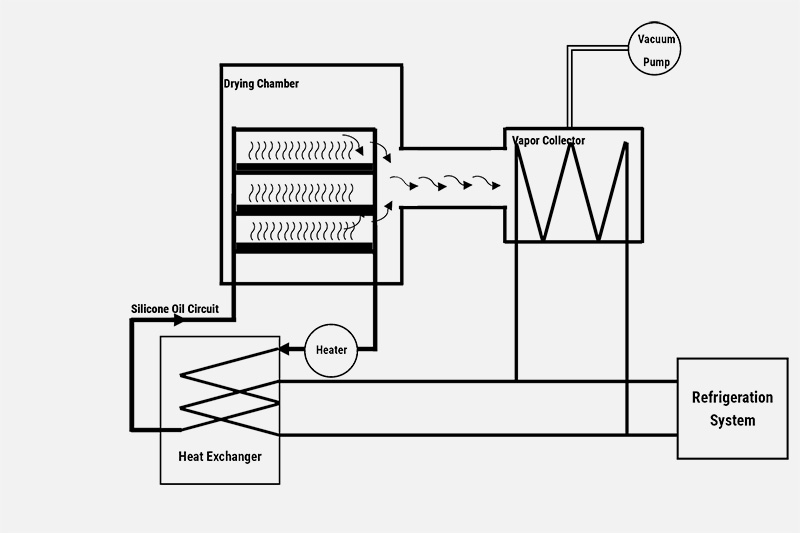
What Is Freeze Drying and How Does Freeze Dryer Work?
The concept is simple. Freeze drying does not heat water away. It freezes it first, then removes the surrounding pressure until the ice skips the liquid phase entirely and converts straight to vapour. That transition, solid directly to gas with no liquid in between, is called sublimation, and it is the entire trick.
The reason it works comes down to something called the triple point. Water does not simply exist in three states. It exists in each state only within a specific corridor of temperature and pressure, and liquid water has the narrowest corridor of the three. Bring the pressure below roughly 4.58 mmHg, and that corridor disappears. Liquid water has nowhere to be. The ice skips it entirely, turns to vapor, and leaves.
The technical name for the process is lyophilisation, though that word rarely makes it out of the laboratory. What matters practically is what it makes possible: moisture pulled out of a material without the material ever touching liquid water, without any significant heat applied, without its structure being disturbed in the process. It comes out dry and essentially unchanged. That is a harder thing to guarantee than most drying methods can offer, and in certain corners of oil and gas, it is precisely what the job demands.
What Actually Happens Inside a Freeze Dryer, Step by Step?
Freeze-drying consists of three steps, and it will be an insult to those three to call them equal.
Freezing is the step where people think they can cheat on the procedure. At first sight, it is a matter of chilling the substance to a freezing point. But that is not all to it. First of all, the material should become as cold as between minus 40 and minus 80 degrees Celsius; such a temperature should be low enough for all moisture in the substance to become ice. All right, but here comes another important detail: how fast do you cool the material?
Slowly cool the substance, and you will create a solid and structured ice structure that readily undergoes the next step. Hurry, and you end up with tiny crystals of stubborn ice, ready to obstruct your efforts during the next step of the process.
Where Does Oil and Gas Actually Come Into This?
Here is where people sometimes get confused. The oil and gas industry is not freeze-drying drill cuttings or running pharmaceutical-style lyophilization cycles on crude. What it is doing is applying the same underlying physics, vacuum, low temperature, and phase change to a set of problems that every operator in the sector eventually faces.
Why is moisture a big problem for the oil and gas industry?
The quick answer would be that water and hydrocarbons simply do not work together.
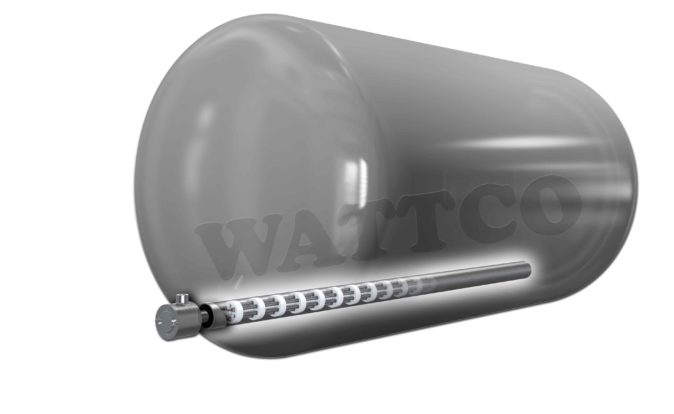
When temperatures drop in a natural gas line, water can collect and turn to ice, effectively plugging up the pipelines. Even more problematic are water molecules that, under specific temperature and pressure conditions, combine with methane to create a stubborn, frozen plug known as methane hydrate. Often, the most reliable way to prevent this buildup is by utilizing a pipe heater to keep the line above freezing. These hydrate plugs are particularly frustrating because they resist almost all efforts to dislodge them, leaving operators with no choice but to use intensive chemical treatments or depressurization. Ultimately, they remain one of the most expensive headaches in pipeline operations.
Then there is corrosion. Natural gas carrying dissolved CO₂ or H₂S becomes acidic when it contacts water. Pipelines corrode from the inside. Moisture in lubricating oils triggers oxidation, shortens fluid life, and puts the equipment the oil was supposed to protect at genuine risk. In pneumatic control systems on offshore platforms, even a modest amount of moisture in the instrument air lines can cause sensors to malfunction or actuators to seize up in cold conditions.
The industry’s accepted moisture specification for natural gas pipelines sits at around 40 lbs per million standard cubic feet, a dew point of roughly negative 20 degrees Celsius. That number is not a guideline. It is a contractual and operational requirement.
How Does Vacuum Drying Actually Factor Into Pipeline Commissioning?
Every new pipeline goes through hydrotesting. Water is pumped in under pressure to verify structural integrity before the line ever carries gas. Then all that water has to come out. Not most of it. All of it.
After mechanical pigs drive out the bulk of the hydrotest water, the line is sealed, and a vacuum pump pulls the internal pressure down. At low enough pressure, residual moisture, including water that has been absorbed into the pipe wall, begins to evaporate and sublimate without any external heating. The process continues until outlet dew point measurements confirm the line is within specification, checked at the pig receiver with a dew point meter.
When it comes to offshore and submarine pipelines, there is only one effective method, vacuum drying. High ambient humidity prevents hot air drying, and the cost of failure is so high that people don’t save money on that procedure.
What Is the Purpose of Vacuum Dehydration in the Maintenance of Equipment?
This is the field where the principle of freeze drying is the most likely to be applied, even though it is never stated.
Vacuum dehydration systems for oil purification are used widely in power plants, refineries, turbine plants, and other places where turbines, hydraulic systems, gearboxes, and transformers have to work. Oil is heated up but not overheated; the process forces water molecules towards their vapor form. Pressure inside the equipment chamber goes low enough for the vaporization of water, which usually needs 100°C to take place at much lower temperature control. Condensation occurs. Clean and dry oil is recycled.
The physics are identical to what happens in a freeze dryer. Lower the pressure and lower the boiling point of water to separate it from the substrate. A typical unit targets between 26 and 30 inches of mercury, pulling dissolved, emulsified, and free water out simultaneously.
Why does this matter so much? Because water contamination at concentrations as low as 200 to 500 parts per million is enough to accelerate oxidation in lubricating oils. That kind of degradation compounds quietly, and by the time equipment shows the consequences, the maintenance window has usually already passed.

How Does Freeze Drying Compare to Glycol Dehydration in Gas Processing?
It is worth being direct here. For continuous dehydration of flowing natural gas at scale, glycol absorption, specifically triethylene glycol or TEG, is the industry standard. Wet gas contacts the glycol in a contactor tower, the glycol absorbs the moisture, and the wet glycol is regenerated in a reboiler and recirculated. It is well understood, cost-effective at volume, and proven across decades of gas processing.
Freeze-drying and vacuum-based drying are not trying to replace that. They operate in a different space, enclosed systems, fixed volumes, and situations where the material being dried cannot simply be run through a contactor. Pipeline sections before commissioning. Batches of lubricating oil in a purification system. Vessels that need to be brought to a very low moisture specification before they carry anything reactive.
The cost difference is real. Freeze-drying equipment runs roughly three times the price of comparable conventional drying systems, and the energy consumption is meaningfully higher. For precision applications where those costs are justified by the consequence of getting it wrong, that trade-off makes sense. For high-throughput gas dehydration, it does not.
What Should Engineers and Operators Actually Take Away from This?
Freeze drying is not exotic in this industry. It is the underlying logic of vacuum pipeline drying, of oil purification systems, and of how operators protect the equipment they cannot afford to replace on short notice. In physics, lower the pressure, remove the liquid phase, and extract moisture without damaging what you are drying.
The operators who understand this tend to make better calls on commissioning timelines, on when a batch of oil is worth purifying rather than replacing, and on which drying method fits which application. Moisture is never a small problem in this industry. Treating the tools built to manage it as a footnote is a mistake worth correcting.