

How Heat Exchangers Improve Data Center Cooling Efficiency
Data centers have a heat problem, and AI just made it a lot worse. Racks that used to draw a comfortable 5 to 10 kilowatts are now routinely pushing far higher, with average rack density jumping around 69% year over year to roughly 27 kW, and AI racks packed with GPUs hitting 140 kW or more. Some next-generation designs are reaching toward 370 kW in a single rack. That’s an astonishing amount of heat concentrated in a small footprint, running around the clock with no breaks.
Air alone can’t keep up with that anymore. And this is where heat exchangers improve data center quietly earn their keep. They move heat from one circuit to another efficiently, without ever letting the two fluids mix, so you can pull heat off the servers and hand it to facility water, outdoor air, or heat rejection gear. Let’s look at how they actually improve cooling efficiency, the main types in use, and how engineers pick the right one.
How Heat Exchangers Improve Data Center Cooling Efficiency?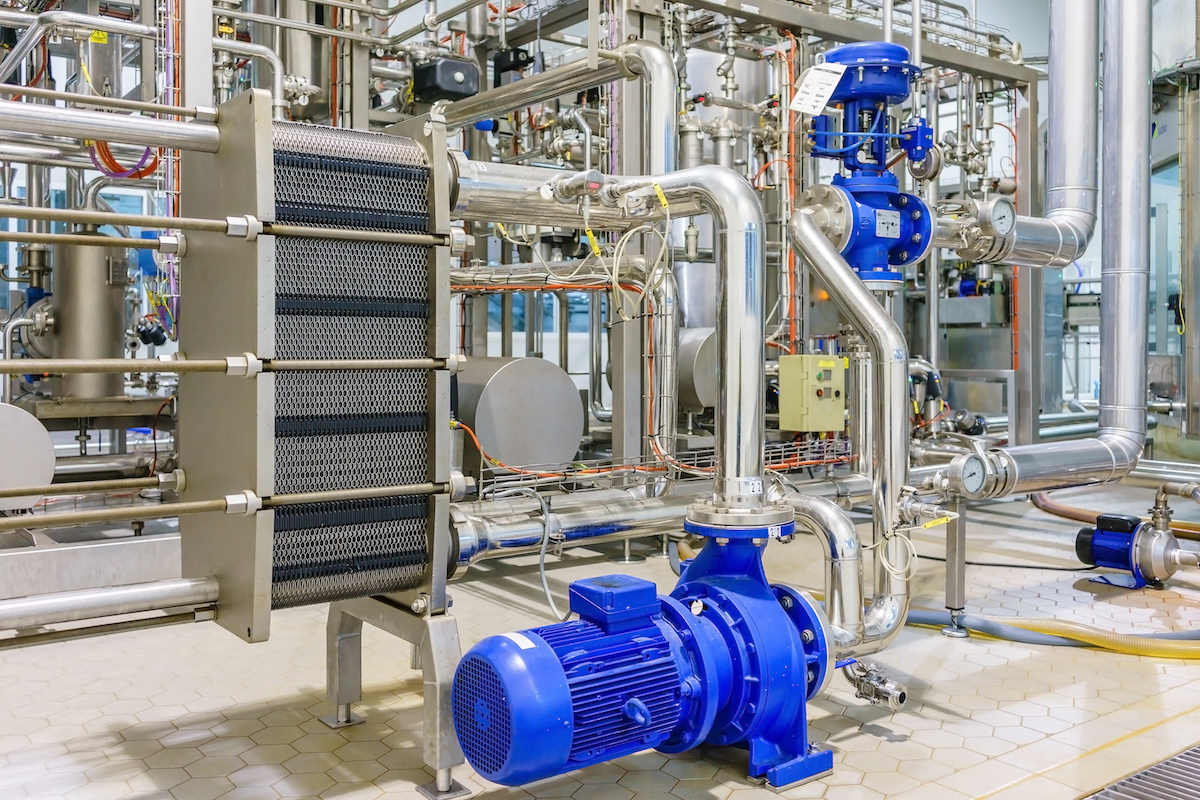
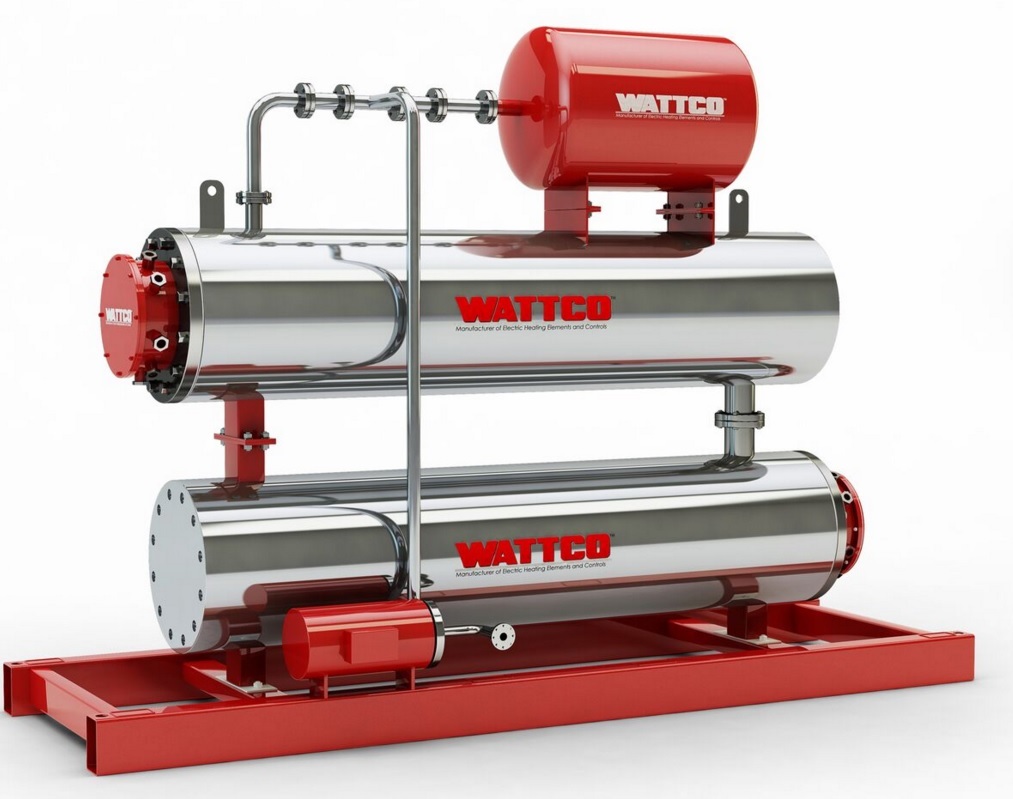
Start with what a heat exchanger does here. It captures heat from the server air or the liquid cooling loop using circulation heaters and transfers it to facility water, outdoor air, or heat rejection equipment, keeping the IT-side fluid and the facility-side fluid completely separate the whole time. That separation is the trick. It lets each loop stay clean and controlled while heat still flows across the barrier between them. Here’s where that pays off.
Removing Heat Closer to the Server
The old approach cooled the whole room and hoped it reached the chips. That’s wasteful, and at today’s densities it barely works. The smarter move is to grab the heat right where it’s made.
Rack-level and chip-level heat exchangers capture heat before it ever spreads into the data hall. A rear-door exchanger pulls heat off the hot exhaust as it leaves the rack. Direct-to-chip cold plates take it straight off the processor. Catch the heat at the source and you don’t have to fight it once it’s escaped into the room, which is a far easier and cheaper job. Less mixing of hot and cold air, less wasted effort, tighter control.
Reducing Fan and Chiller Energy Use
Cooling energy is a huge part of a data center’s power bill, and heat exchangers cut into it from two directions. When you transfer heat efficiently at the source, you need far less airflow to move it around, so the fans work less hard. And you lower the load dumped onto the mechanical chillers, which are the real energy hogs.
The savings are not small. Direct-to-chip architectures built around efficient heat exchange have delivered cooling energy reductions in the range of 30 to 60%. That’s the difference between a facility that bleeds money on cooling and one that runs lean. Every watt you don’t spend on fans and chillers is a watt you can sell as compute.
Enabling Free Cooling and Economizer Operation
Here’s my favorite part, because it’s almost free efficiency. When outdoor conditions are cool enough, a heat exchanger lets you use the outside air or a dry cooler to chill your facility water loop directly, reducing or even bypassing the chillers entirely. That’s free cooling, and it’s a big deal.
Liquid cooling actually makes this easier, because liquid loops can run warm and still do their job. Some newer AI platforms support liquid cooling at around 45 degrees Celsius, which is hot enough that a facility can reject that heat through dry coolers using ambient air instead of running mechanical refrigeration. Warmer loops, more hours of free cooling per year, lower energy use. The heat exchanger is what makes that handoff to the outdoors possible without contaminating the IT loop.
Supporting High Density and AI Computing
This is the whole reason the topic is hot right now. Air cooling simply runs out of road at AI densities, so liquid-based heat exchange has gone from optional to necessary. Rear-door heat exchangers, direct-to-chip cooling, and full liquid cooling systems are what keep these racks alive.
There’s a hierarchy to it, though. Rear-door exchangers do great work, but they start to fall short somewhere around the 100 to 175 kW range, where direct-to-chip cooling takes over. For a 140 kW Blackwell rack, you’re firmly in liquid territory, and single-phase direct-to-chip has already grown to roughly 55% of that market. The point is simple. As racks get denser, the heat exchanger moves closer and closer to the silicon, because that’s the only way to keep up.
Separating IT and Facility Cooling Loops
Last, there’s a reason data centers don’t just plumb facility water straight through their servers. Facility water can carry minerals, particles, and pressure swings you never want near sensitive electronics. So you keep the two apart.
A coolant distribution unit, or CDU, uses a heat exchanger to isolate the clean, tightly controlled technology cooling loop from the main facility water system. Heat crosses over. Contaminants and pressure problems do not. This separation enables precise temperature control, protects expensive hardware, keeps the IT loop pristine, and lets facility engineers manage the building side without ever touching the delicate server side. It is a clean division of labor, made possible by one well-placed exchanger.
Types of Heat Exchangers Used in Data Centers
No single design fits every situation. The right one depends on rack density, your cooling architecture, the space you’ve got, the coolant type, and your existing facility infrastructure. Here are the main players.
Liquid to Liquid Heat Exchangers
These transfer heat between two liquid loops, and they’re the heart of modern liquid cooling. You’ll find them inside coolant distribution units, in direct-to-chip systems, and at the connection point to facility water. Where a warm technology loop needs to hand its heat to a separate facility loop, a liquid-to-liquid exchanger does the work. Compact, efficient, and built for high heat loads.
Rear Door Heat Exchangers
Simple idea, clever execution. A rear-door heat exchanger replaces the back door of a server rack with a coil, so it absorbs the hot server exhaust directly, right behind the rack, before that heat ever enters the room. The air leaves the rack already cooled. For mid-density deployments they’re a great, space-efficient option, and they retrofit onto existing racks without redesigning the whole hall.
Air to Air Heat Exchangers
When you want the energy savings of outside air without the risk of actually bringing outside air in, air-to-air exchangers are the answer. They’re the core of indirect economizers, transferring heat from the inside air to the outside air across a barrier, so dust, humidity, and pollutants stay out of the data hall. You get the free-cooling benefit of the outdoors while keeping the indoor environment sealed and clean.
Plate and Frame Heat Exchangers
These pack a lot of performance into a small box. A plate-and-frame exchanger stacks many thin plates to create a huge heat-transfer surface in a compact footprint, which makes it a natural fit for liquid cooling loops and CDUs where space is tight and efficiency matters. They’re also easy to expand, since you can often add plates as your load grows. A lot of facility water connections lean on them for exactly these reasons.
What Engineers Should Consider When Selecting a Heat Exchanger?
Picking the right unit isn’t about grabbing the biggest one. The system has to meet the data center’s full thermal, hydraulic, reliability, and maintenance needs, and a few factors deserve real thought before you commit.
Calculate the Current and Future Heat Load
Size for tomorrow, not just today. Rack densities have been climbing fast, so an exchanger sized only for your current load may be swamped after your next hardware refresh. Work out the heat you’re rejecting now, then build in headroom for the AI racks you’ll almost certainly add later. Undersize this and you’ll be ripping it out sooner than you’d like.
Review Flow Rate, Temperature Difference, and Pressure Drop
These three set the performance envelope. What flow rate does your loop run? What temperature difference do you need across the exchanger? And how much pressure drop can you accept before your pumps start eating the savings? Get this balance right and the exchanger performs efficiently. Get it wrong and you either miss your temperatures or waste energy pushing fluid through it.
Match Materials to the Cooling Fluid
The fluid decides the metal. Facility water, treated coolants, and glycol mixes all behave differently, and the wrong material invites corrosion, scaling, and eventually leaks, which is the last thing you want near live racks or inline heaters. Match the plate and gasket materials to your actual coolant chemistry, and account for water quality, so the unit lasts its full service life instead of failing early.
Plan for Reliability and Maintenance
Data centers don’t get to shut down for repairs. So plan for uptime from the start. Think about redundancy, easy access for inspection and cleaning, and how you’ll service or replace components without taking critical load offline. An exchanger that’s easy to maintain, with room for a spare path, protects you on the day something inevitably needs attention. Reliability isn’t a feature you add later. It’s a design choice you make now.
Final Thoughts
Heat exchangers improve data center cooling efficiency in a handful of connected ways. They capture heat closer to its source, cut the airflow you’d otherwise need, make liquid cooling and high AI densities possible, and lower your reliance on power-hungry mechanical refrigeration. Add it up and you get a cooler, cheaper, more capable facility.
There’s no universal best design, though. The right choice comes down to your heat load, your coolant conditions, your existing infrastructure, your reliability requirements, and how much you expect to grow. Get those inputs right, match the exchanger to them, and you build a cooling system that keeps pace with whatever the next generation of AI hardware throws at it.
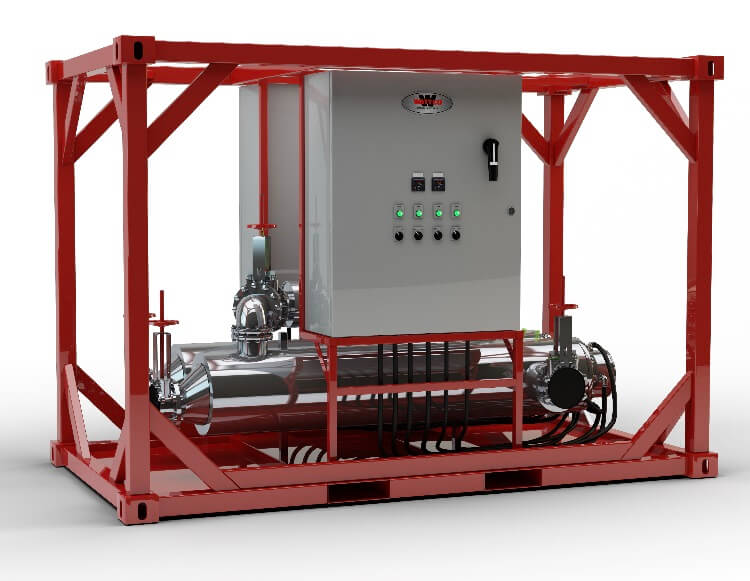
Wattco provides engineered thermal solutions that support efficient heat transfer, precise coolant temperature control, and reliable performance in modern data center cooling systems. Our products can support coolant conditioning, thermal-loop testing, commissioning, and cold-weather protection in high-density data center applications.