

What Types of Heat Exchangers Are Used in the Oil and Gas Industry?
Walk through any refinery or gas plant and you’ll pass hundreds of them without noticing. Heat exchangers don’t draw attention to themselves. They just sit there, quietly moving heat from one stream to another, and honestly, without them the whole operation would grind to a halt.
That’s not an exaggeration. Nearly every process in oil and gas involves heating something up or cooling something down at some point, and a heat exchanger is how you do that without wasting energy or wrecking equipment. But here’s the thing. There isn’t one type that does it all. Different jobs call for different designs, and picking the wrong one is an expensive mistake to live with. So let’s walk through the main types, where they show up, and how engineers actually decide.
Why Heat Exchangers Play Such a Critical Role in Oil and Gas Operations?
Start with what they’re really doing. A heat exchanger transfers heat between two fluids without letting them mix. One stream gives up heat, the other picks it up, and a wall of metal keeps them separate the whole time.
Sounds simple. The impact isn’t. These units manage process temperatures so reactions and separations happen in the right window. They recover usable energy that would otherwise go up a stack and get wasted. They protect downstream equipment from running too hot. And they keep production moving under conditions, high pressure, high temperature, nasty fluids, that would chew up lesser gear. In a facility where energy is one of your highest costs, a good exchanger network is quietly saving you money every single hour it runs.
The Types of Heat Exchangers Used in the Oil and Gas Industry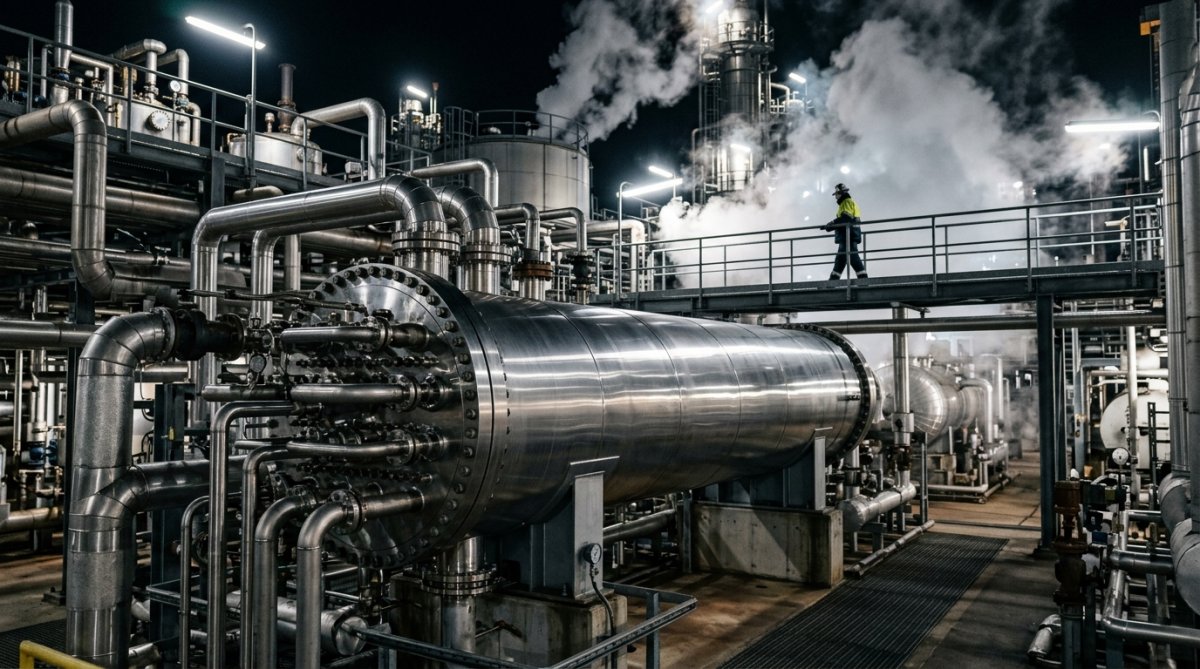
There’s no universal winner here. Each design trades off differently on pressure, temperature, fluid type, footprint, and how easy it is to clean. The four you’ll run into most are shell and tube, plate, air cooled, and double pipe or spiral. Let’s take them one at a time.
Shell and Tube Heat Exchangers
If you had to bet on one design, you’d bet on this. Shell and tube exchangers are the workhorse of the industry, and they’ve earned it.
The build is straightforward. A bundle of tubes sits inside a larger cylindrical shell. One fluid runs through the tubes, the other flows around them inside the shell, and heat crosses the tube walls. What makes them so hard to beat is their toughness. They handle high pressures and high temperatures without complaint, they come in an enormous range of sizes, and when the tubes eventually foul or wear, you can often pull the bundle and service it. For demanding refinery and process duties, that durability and pressure handling is exactly why they’re still the default after all these decades.
Plate Heat Exchangers
Sometimes you just don’t have the room, or you need heat transfer that’s a cut above. That’s plate territory.
A plate exchanger stacks thin corrugated metal plates with narrow gaps between them, and the two fluids flow through alternating channels. All those plates pack a huge amount of heat transfer surface into a small box, so you get excellent efficiency and a very close temperature approach in a fraction of the footprint a shell and tube would need. Where space is tight and you want efficient heat transfer, plates make a lot of sense. They do have limits, gaskets don’t love extreme pressures or heavy fouling, so they’re not for every service. But in the right spot, they’re hard to top.
Air Cooled Heat Exchangers
Not every site has water to spare. Some are in the desert. Some are remote, with no cooling tower and no river nearby. That’s where air cooled units, the big fin fan banks you’ve seen, come into their own.
Instead of cooling water, they push ambient air across finned tubes with large fans, and the air carries the heat away. No water source needed, no water treatment, no discharge to manage. For remote, water scarce, or high capacity facilities, that independence from cooling water is a genuine advantage. The tradeoff is footprint and a bit of weather dependence, since performance shifts with the ambient air temperature. But when water is the constraint, air cooling solves your biggest problem outright.
Double Pipe and Spiral Heat Exchangers
Then there are the specialists. Double pipe and spiral exchangers won’t run your whole plant, but for certain duties they’re the smart pick.
A double pipe unit is about as simple as it gets, one pipe inside another, with fluids flowing in opposite directions. That simplicity makes it great for smaller duties and high pressure services, and you can bolt on more sections as your load grows. Spiral exchangers, with their curved flow channels, shine on the ugly stuff, viscous fluids and streams that foul easily, because the flow path resists plugging and is easier to keep clean. So when you’re dealing with a small duty, serious pressure, thick fluid, or a stream that gums everything up, these designs often make better sense than forcing a big shell and tube onto the job.
Where Heat Exchangers Are Used in Everyday Oil and Gas Processes?
Enough theory. Where do these actually earn their keep day to day? All over, but a few duties come up again and again.
Heating Crude Oil Before Pumping, Separation, or Distillation
Heating Crude Oil cold is thick and stubborn, and thick crude fights you at every pump and every process step. So you warm it first. Run it through an exchanger, bring the temperature up, and its viscosity drops, which means it flows and pumps far more easily. That controlled preheating also gets the crude ready for what comes next, whether that’s separation or heading into the distillation column. Warm it right and everything downstream goes smoother.
Cooling and Conditioning Natural Gas After Compression
Compression heats gas up, sometimes a lot. And hot gas is a problem for most of the steps that follow. So right after a compressor stage, you’ll usually find an exchanger pulling that temperature back down.
Getting the gas to the right temperature matters before it moves on to dehydration, separation, storage, or the pipeline. Too hot and you’ll run into trouble with water removal and with meeting pipeline specs. Cooling and conditioning the gas at the right point keeps the rest of the train working the way it should.
Recovering Heat Inside Refineries to Reduce Energy Waste
This one’s my favorite, because it’s basically free money. Refineries are full of hot streams that have finished their job and need cooling, and cold streams that need heating before theirs. So why not pair them up?
That’s heat recovery, and it’s everywhere in a well run refinery. A hot product stream preheats an incoming feed instead of dumping its heat to the atmosphere, which means the furnace downstream has less work to do and burns less fuel. Do that across a whole preheat train and the fuel savings are substantial. Lower energy use, lower operating cost, same output. Hard to argue with that.
What Engineers Should Consider Before Choosing a Heat Exchanger?
Here’s where people get into trouble. It’s tempting to size an exchanger on the heat transfer rate alone and call it done. Don’t. The right choice depends on the full operating duty, and a few factors deserve real attention before you commit.
Start with Pressure, Temperature, Flow, and Pressure Drop
These four set the boundaries for everything else. What pressure and temperature control will the unit actually see, not just on a normal day but during startup and during process upsets? What are the flow rates? And how much pressure drop can you afford across the exchanger before it starts costing you pumping energy or throughput?
Normal operating conditions are only part of the story. The startup loads and the process swings are what catch people out, because an exchanger sized purely for steady state can struggle the moment conditions move. Design for the real range, not just the nameplate case.
Match Construction Materials to the Process Fluid
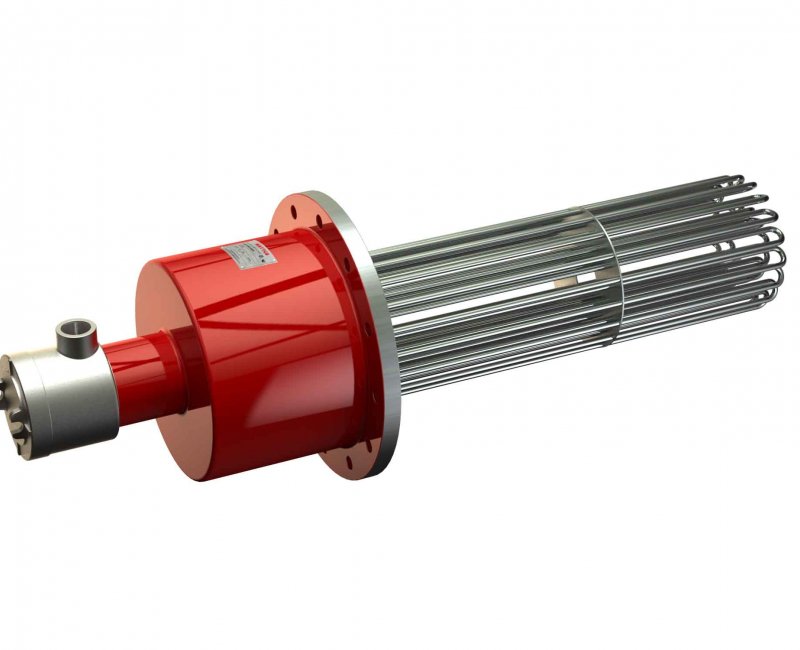
The fluid decides the metal. A stream that’s corrosive, or sour, or carrying solids and contamination, will destroy the wrong material fast. So you match construction to the fluid, weighing corrosion resistance, chemical compatibility, viscosity, and how likely the stream is to foul.For tanks and pressure vessels handling large volumes of oil, flanged heaters provide direct heating and can be manufactured with alloys selected for the fluid and operating environment.
Get this wrong and you’re looking at premature failure, leaks, and unplanned shutdowns. Get it right, with the appropriate alloy for the service, and the unit quietly does its job for years. Fouling potential especially deserves a hard look up front, because it drives both the material choice and the design margin you’ll want.
Think About Cleaning and Maintenance Before Installation
Last, and people love to skip this one, think about the day you’ll have to open it up. Because you will. Every exchanger fouls eventually, and how easy it is to service makes a huge difference to your uptime.
Can you get access to inspect it? Can you clean it mechanically, or chemically, without a major teardown? Can you pull and replace the tubes or plates when the time comes? An exchanger that’s a nightmare to maintain will cost you far more in downtime over its life than you saved buying it. Plan for cleaning and repair before it’s installed, not after it’s already jammed into a corner you can’t reach.
Final Thoughts
Choosing the right heat exchanger isn’t really about finding the “best” type. It’s about matching the design to your reality, the process conditions, how the fluid behaves, the maintenance access you’ll have, and the reliability your facility genuinely needs over the equipment’s service life.
Shell and tube, plate, air cooled, double pipe, spiral, they all earn their place somewhere. The skill is knowing which job belongs to which. Take the time to understand the full duty first, and the right choice usually makes itself obvious. Rush it, and you’ll be reminded of what you skipped every time the unit fouls, fails, or falls short.
Oil and gas facilities rely on the right heat exchanger to improve process efficiency, recover energy, and protect critical equipment. Contact Wattco to discuss your operating conditions and discover a customized heating solution for your application.