

How Are Thermal Fluid Heaters Used in the Oil and Gas Industry?
Oil doesn’t like to cooperate when it’s cold. Heavy crude turns sluggish, thick, almost stubborn. Wax starts dropping out of solution in a pipeline. A storage tank that flowed fine in summer becomes a problem in January. Heat is what keeps all of it moving, and in a lot of oil and gas operations, the smartest way to deliver that heat isn’t a direct flame at all. It’s a thermal fluid system.
If you’ve spent any time around process heating, you already know the appeal. Thermal fluid heating is indirect. You heat a transfer fluid, circulate it through a closed loop, and let it hand off its heat to the product without ever putting a hot element or an open flame in direct contact with something flammable. In an industry where the whole environment is combustible, that distinction matters a lot. Let’s get into how it actually works, where it shows up, and how to pick the right system.
Why Thermal Fluid Heating Matters in Oil and Gas Operations?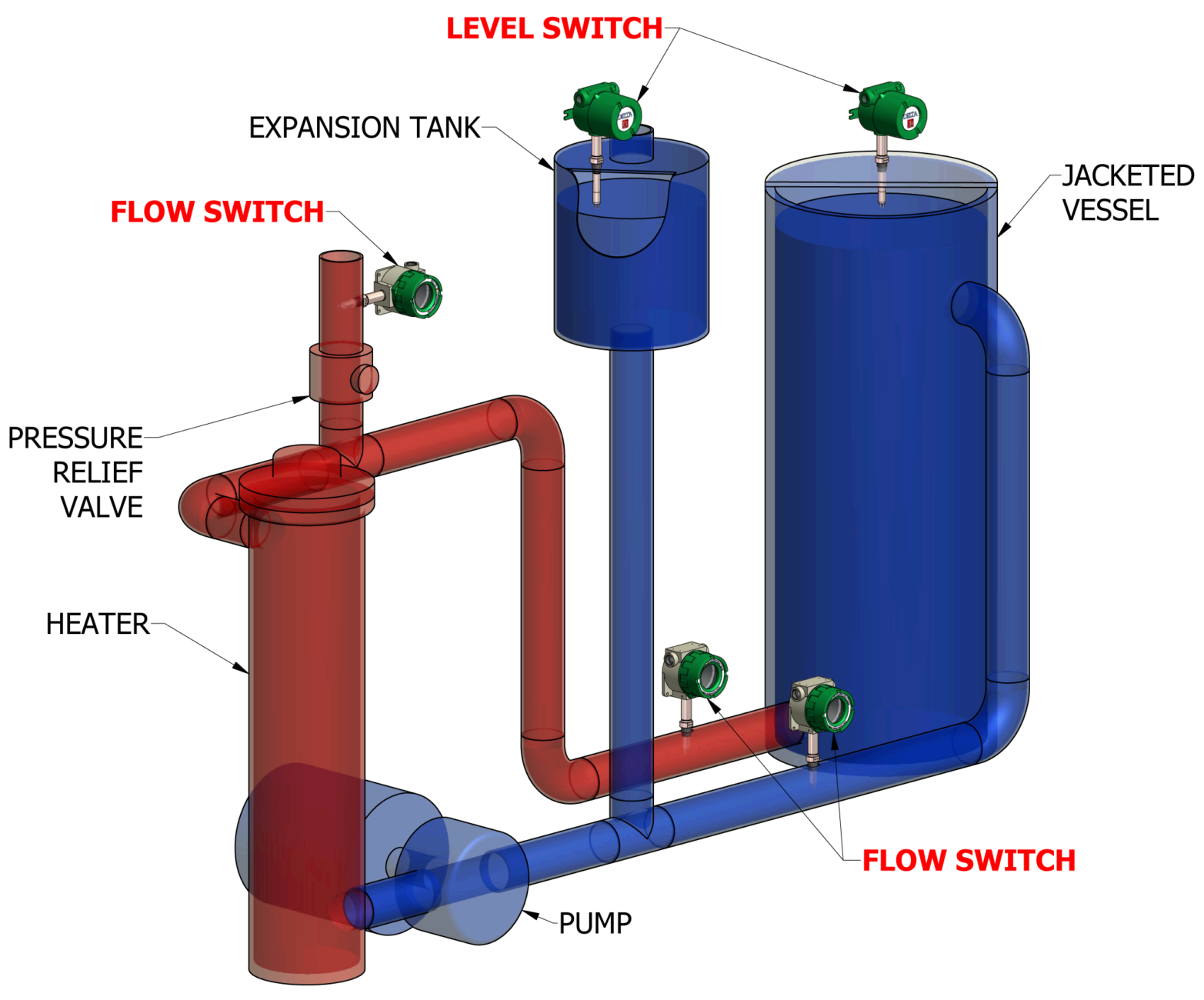
Here’s the core idea. A thermal fluid system heats a circulating fluid, usually a specialised heat transfer oil, and moves that fluid through heat exchangers, jackets, or coils to warm whatever process needs it.
The heat is controlled and indirect, which is exactly what demanding oil and gas applications want when stable temperatures and reliable circulation aren’t optional.
Compare that to steam for a second. Steam has to run at high pressure to reach high temperatures, and pressure means heavier vessels, more safety gear, and more that can go wrong. A thermal fluid can hit those same high temperatures at close to atmospheric pressure.
Lower pressure, tighter temperature control, and no water treatment headaches. For a process that can’t tolerate a hot spot scorching the product, that steady, even heat is the whole point.
Where Thermal Fluid Heaters Are Used in the Oil and Gas Industry?
Short answer? Just about everywhere heat touches the product. Production, storage, transportation, refining, petrochemical processing. Each stage has its own reason for needing controlled heat, so let’s walk through them.
Crude Oil and Heavy Fuel Preheating
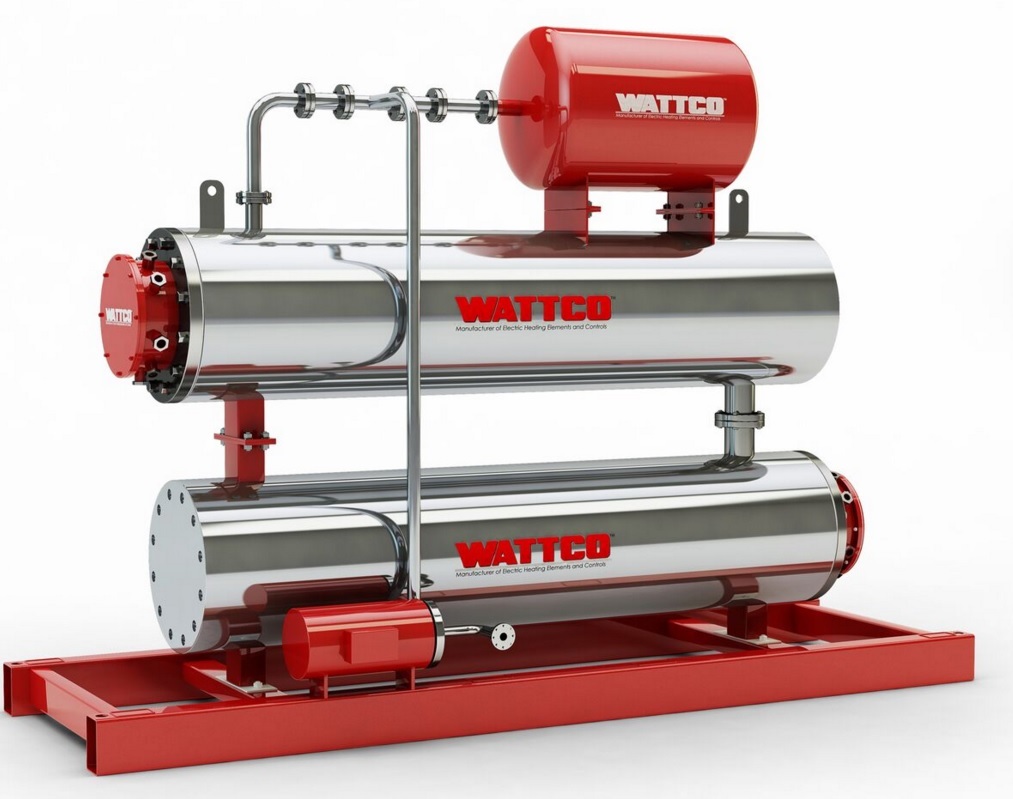
This is the classic one. Heavy crude and heavy fuel oils are thick and slow at ambient temperature, and thick oil is a nightmare to pump and move. So you preheat it. Warm the oil up, its viscosity drops, and suddenly it flows the way you need it to, easier to pump, transfer, process, and handle.
It’s not a small energy line item either. Preheating crude is one of the highest points of energy consumption in the whole processing chain, which is exactly why so many operators have moved to electric heating for it. Direct, controlled, efficient. Thermal fluid systems and circulation heaters bring the oil up to temperature without the localized overheating that would cook it and leave you with coke deposits and fouled equipment.
Storage Tank and Pipeline Heating
Getting oil warm once isn’t enough. You have to keep it warm. A storage tank full of heavy product will slowly thicken as it loses heat to the surroundings, and a pipeline running cold invites wax buildup and pressure problems.
Thermal fluid systems help hold those operating temperatures steady. Circulate heated fluid through tank coils or trace lines along a pipeline, and you maintain the temperature the product needs to stay pumpable. No thickening, no surprise blockage, no crew out at 2am trying to figure out why nothing’s moving. Reliable circulation in, reliable flow out.
Natural Gas and Process Stream Heating
It’s not only about oil. Plenty of gases and process streams have to hit a specific temperature before they can be treated or sent further down the line. Think of a gas stream that needs warming ahead of a separation or treatment step.
Circulation heating handles this well. The stream passes through the heater, picks up heat evenly as it goes, and comes out at the target temperature, consistently, batch after batch. That repeatability is what downstream processes are counting on.
Refinery and Petrochemical Process Heating
Once you’re inside a refinery or a petrochemical plant, the equipment gets temperature-sensitive fast. Heat exchangers, reactors, separators, distillation gear. A lot of these processes only work inside a narrow temperature band, and drift outside it and your yield or product quality suffers.
Thermal fluid heaters are a good fit here precisely because they hold that band. They feed steady heat to the equipment that needs it, without the sharp swings a less controlled system might introduce. For a reactor running a sensitive reaction, “steady” isn’t a nice-to-have. It’s the job.
Why Oil and Gas Facilities Use Thermal Fluid Heaters?
So why reach for thermal fluid over other options? It comes down to a handful of things these systems just do well.
Consistent Process Temperature
This is the big one. Because the heat is indirect and the fluid circulates evenly, you get tight, consistent temperature control. No flame licking one side of a vessel, no scorched product film. Just even heat, held where you set it. For sensitive crude, fuels, and chemical streams, that consistency protects the product and your equipment both.
Efficient Closed-Loop Heat Transfer
The loop is closed, so the same fluid keeps circulating and carrying heat, over and over. You’re not constantly generating and losing a medium the way you do venting steam. That closed-loop design keeps efficiency high and heat losses low, and once it’s running at temperature, it stays there with less energy than you might expect.
Flexible Installation and System Design
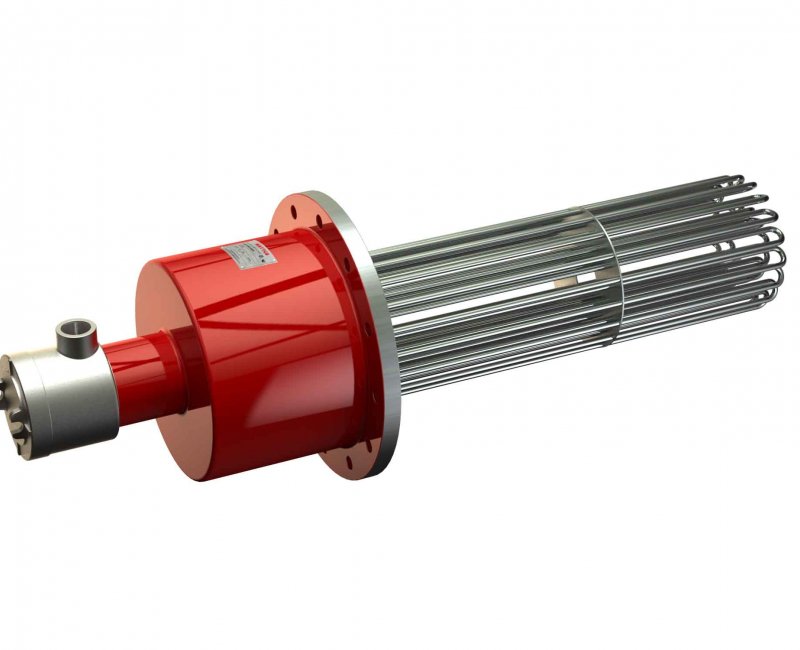
Every facility is a little different, and thermal fluid systems bend to fit. Circulation heaters are built from a flanged heaters or screwplug immersion heaters dropped into a pressure vessel or pipe body, with inlet and outlet piping routing the fluid through. That modular setup means you can size and configure a system around your actual footprint and load, rather than forcing your process to fit the heater.
Electric Heating for Controlled Industrial Processes
Go electric, and the control gets even tighter. Electric circulation and immersion heaters convert nearly all their input into usable heat, and they respond fast and precisely to a control signal. No combustion, no emissions at the point of heating, no fuel handling. For an operator who wants exact, repeatable temperatures in a hazardous environment, that’s a strong combination.
How to Select the Right Thermal Fluid Heater?
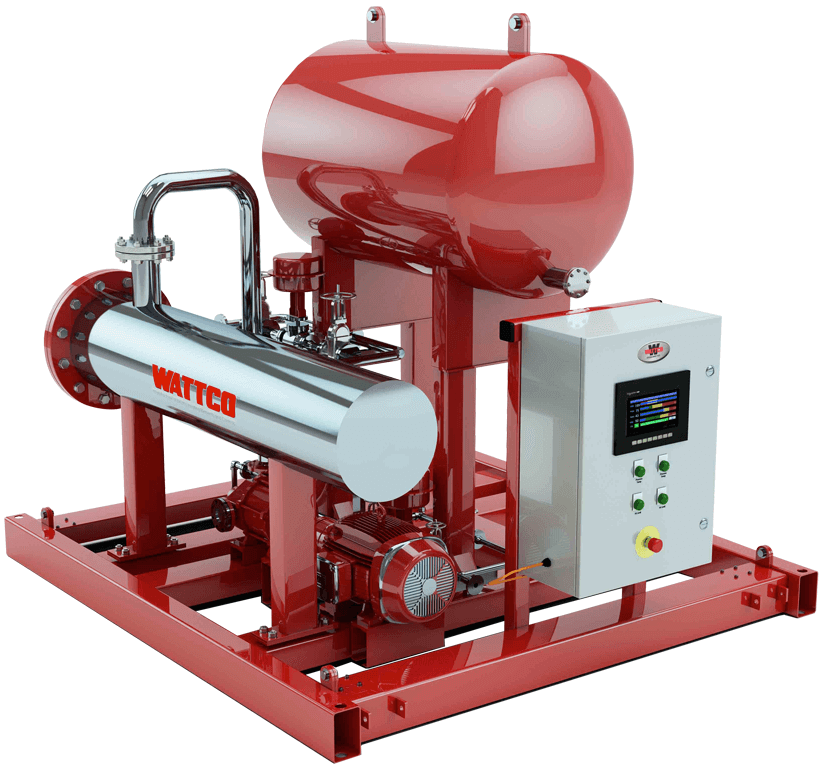
Now the part people rush and regret later. Picking a heater is not just reading a kilowatt number off a spec sheet and calling it done. You’ve got to look at the whole picture, the process, the fluid, the environment, and how you’ll control it. Miss one and you’ll feel it in performance or in a shortened heater life. Here’s how to think it through.
Calculate the Required Heat Load
Start with the math. What’s your inlet temperature, and what outlet temperature do you actually need? What’s the fluid flow rate? How fast does the system have to come up from cold on startup? Add in your process heat losses, then a sensible margin on top.
All of that rolls into the real required heating capacity. Undersize it and you’ll never quite hit temperature, or you’ll crawl to it painfully slowly. Oversize it carelessly and you’re wasting money and, worse, pushing watt density higher than the fluid can handle. Get the load right first. Everything else builds on it.
Evaluate the Thermal Fluid and Process Conditions
Next, look hard at the fluid itself. What are its properties? What’s its maximum recommended operating temperature? How viscous is it, at what pressure will it run, and how fast is it circulating? These aren’t trivia. They decide whether the fluid stays healthy or starts breaking down.
That last risk, thermal degradation, is the one that bites people. Push a heat transfer fluid past its limits, or let it sit against an element that’s too hot, and it degrades. It cokes, it fouls, heat transfer drops, and now you’ve got a maintenance problem baked into your design. Knowing the fluid’s limits up front is how you avoid that.
Select Suitable Materials and Watt Density
Materials have to match the job. The sheath material on the elements, the vessel construction, the flange design, all of it needs to suit both the fluid and the operating conditions. The wrong sheath in a corrosive or high-temperature service won’t last.
And watch the watt density. That’s the heat output spread across the element’s surface, and it might be the single most underrated number in the whole selection. Too high, and the fluid film right at the element surface overheats and degrades, even if your bulk temperature looks fine. This is why you’ll see designs like a circulation heater built with dozens of hairpin tubular elements; in one Wattco case, 72 of them, specifically to spread the load and keep watt density low enough for long heater life. Lower watt density, gentler on the fluid, longer service.
Plan for Controls and Hazardous Locations
Last, and you can’t skip this in oil and gas, plan the controls and the electrical protection. You’ll want temperature sensors, thermocouples or RTDs reading the process. Flow monitoring, because an element firing with no flow across it will burn itself out fast. Overtemperature protection as a hard safety backstop. Pressure controls where the process demands them.
Then there’s the environment. Oil and gas facilities are full of flammable, potentially explosive atmospheres, so the electrical enclosures and terminal housings have to carry the proper hazardous-location rating for the area they sit in. This isn’t a box to tick at the end. It’s a safety requirement that shapes the whole build, so bring it into the design early, not after the fact.
Final Thoughts
A well-engineered thermal fluid heater can make oil and gas processes safer, steadier, and a good deal more efficient. That’s the payoff. But notice the word “engineered.” The performance doesn’t come from the heater in isolation. It comes from matching that heater to the real fluid, the actual heat load, the true operating conditions, and the maintenance reality of your site.
Get that matching right and the system mostly disappears into the background, quietly holding temperature, keeping product moving, running for years. Get it wrong and you’ll be chasing degraded fluid, fouled elements, and inconsistent heat. So take the time on selection. The heater is only as good as the thinking you put into choosing it.