

NEMA 7, ATEX, or IECEx? Choosing the right heater for hazardous locations
Specifying a heater for an ordinary process is one thing. Specifying one for an area where flammable gases, vapours, or combustible dust might be floating around is a different game entirely, and it catches plenty of good engineers out. The heater itself is only half the job. The rest is showing that the equipment meets the hazardous-location rules for that exact site and region, because a heater that fits the process beautifully but not the atmosphere simply won’t be allowed near the plant.
Between NEMA 7, ATEX, IECEx and the rest, the acronyms come thick and fast, so what I’ve laid out below is a straightforward look at each one and how to settle on the right fit without getting buried in compliance-speak.
Why hazardous-location heater selection needs extra attention?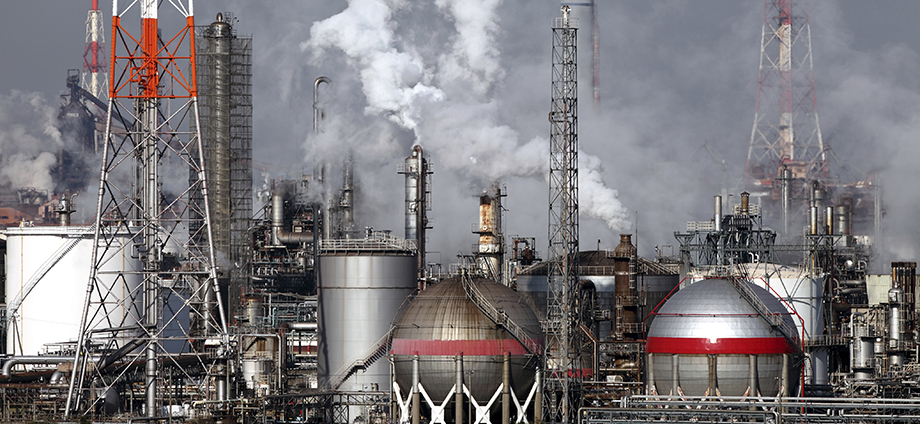
A standard industrial heater is built to heat things, not to survive an atmosphere that could ignite. Drop one into the wrong environment and the very thing that makes it useful, a hot surface and live electrical connections, becomes the risk. That’s the whole reason hazardous areas get treated differently. That’s why equipment such as explosion-proof duct heaters is purpose-built for hazardous environments, where the enclosure, heating elements, temperature protection, and area classification all have to work together safely.
Electrical equipment going into them has to be chosen with the surrounding atmosphere in mind, the conditions it’ll run under, and whatever safety requirements apply to that space. It’s less about finding a heater that works and more about finding one that works and is genuinely safe to energise where it’s going.
NEMA 7: what engineers should know
NEMA 7 is a North American enclosure rating, and in everyday terms it refers to enclosures made for particular hazardous indoor spaces where flammable gases or vapours could show up. Containment is the whole idea, so should a spark or a small explosion occur inside one, it’s kept inside rather than spilling out into the air nearby. You’ll see this approach on equipment such as flanged heaters with NEMA 7 enclosures, but the enclosure is still only one part of the specification. The heater must also suit the full hazardous-area classification, process conditions, temperature limits, and project requirements.
Where NEMA 7 is commonly used
You see NEMA 7 equipment across oil and gas facilities, chemical plants, refineries, and heavier industrial processing sites, basically anywhere the surrounding air might occasionally carry something flammable. The trap here is treating the enclosure rating as if it settles everything. It doesn’t. The move is to confirm the full area classification for the exact spot the heater’s going, rather than picking equipment off the enclosure rating alone and assuming the rest sorts itself out.
What is ATEX and where does it apply?
ATEX is the one that turns up on European jobs, covering equipment meant for potentially explosive atmospheres across the European Union. Rather than getting lost in the regulatory wording, the practical thing to hold onto is that ATEX governs whether a piece of equipment is approved to operate in a defined explosive atmosphere over there, and it comes with its own way of describing how dangerous a given area is. If your project touches the EU market, ATEX is very likely part of the conversation.
Understanding ATEX zones and equipment categories
ATEX leans on the idea of Zones, which describe how often and how long an explosive atmosphere is likely to be present, and on equipment categories that say what a given piece of kit is suitable for. You don’t need the full regulatory text in your head to specify well. What you do need is the site’s own hazardous-area documentation, because that’s what tells you the Zone you’re dealing with, and that in turn should steer which heater is appropriate. Let the paperwork for the area lead, not a guess.
What is IECEx?
IECEx is an international certification system for equipment that runs in explosive atmospheres, and its whole appeal is that it isn’t tied to one country. Where NEMA sits with North America and ATEX with the EU, IECEx is built to be recognised across borders, which makes it the natural fit for equipment that needs to be accepted in more than one market. For a lot of global work, it’s the certification that keeps everyone speaking the same language.
When IECEx becomes important?
IECEx tends to come to the front on global projects, multinational facilities, and large EPC specifications, the sort of jobs where equipment built in one country ends up installed in another. On those, the customer or the project documentation will often call for IECEx-certified equipment specifically, precisely so the same kit can be signed off in different regions without starting the approval process from scratch each time. So if your work stretches across markets, it’s worth raising IECEx sooner rather than later.
NEMA 7 vs ATEX vs IECEx: what is the difference?
Honestly, they share a purpose but part ways in the detail, which is exactly why you can’t swap one for another just because all three deal with dangerous air. NEMA 7 is really an enclosure rating from the North American tradition, ATEX is a European framework for equipment in explosive atmospheres, and IECEx is a certification scheme built to work internationally. They differ in geography, in how they classify areas, in how certification works, and in what a given project will actually demand of you. Assuming one automatically satisfies another is how projects end up stalled.
Geography and project requirements matter
A good rule of thumb is to start from where the equipment is going. NEMA-related requirements dominate in North America, ATEX is tied to the European market, and IECEx shows up on international work. That’s a helpful map, but it’s only a starting point, because the real authority is the project specification and the local regulations for the site. So the sensible first move is to look those up, because between them they show which system, or which blend of systems, really applies to the job you’ve got.
Start with the hazardous-area classification
Before you get anywhere near choosing a heater, you need to know how the area itself is classified, and this is the step people are most tempted to skip. Depending on the system in play, that means gathering the Class, Division, Group, Zone, and temperature-class information that describes the space. Those details aren’t bureaucratic box-ticking, they’re the definition of what the heater has to be able to handle safely, and without them any selection is really just a hopeful guess.
Why temperature classification matters?
Here’s one that quietly trips people up. In an area with flammable gases or vapours, the maximum surface temperature of your equipment can be the difference between safe and dangerous, because a surface hot enough to ignite the surrounding atmosphere is a serious problem no matter how well-built the rest of the heater is. That’s what a temperature class describes, the surface temperature limit the equipment stays within. Pick a heater with an unsuitable temperature rating for the area and you’ve introduced risk that no other feature can cancel out.
The process conditions still matter
It’s easy to get so focused on certification that you forget the heater still has an actual job to do. Hazardous-area approval on its own doesn’t make a heater right for your application. All the usual engineering still applies, so you’re still weighing the process temperature, the properties of the fluid, the pressure, the flow rate, the watt density, and how well the heater resists corrosion.
A certified heater that’s wrong for the process is still the wrong heater, it’s just a compliant version of wrong. All the usual engineering still applies. For applications using industrial circulation heaters, that means accounting for process temperature, fluid properties, operating pressure, flow rate, watt density, materials, and the hazardous-location requirements around the equipment.
Match the heater material to the process
The sheath and any wetted materials need to suit two things at once, the medium they’re heating and the environment they’re sitting in. Corrosion is the obvious one, but chemical compatibility and high-temperature behaviour matter just as much, and the right answer depends on your specific fluid and conditions. Stainless steel covers a lot of ground, tougher or hotter or more aggressive duties may call for something like Incoloy, and the point is to match the material to reality rather than defaulting to whatever’s standard.
Think about controls, sensors, and enclosures as one system
The heater is one piece of a larger electrical heating package, and in a hazardous area the whole package has to hang together. Temperature sensors, terminal enclosures, control panels, and the wiring between them may all need to meet the project’s hazardous-location requirements too, not just the heating element itself. The heater is one piece of a larger electrical heating package, and in a hazardous area the whole package has to hang together.
Temperature sensors, terminal enclosures, wiring, and explosion-proof temperature control panels may all need to satisfy the project’s hazardous-location requirements, not just the heating element itself. Certify the heater and overlook the enclosure or the control gear and you’ve still got a compliance gap, so it pays to think of the entire assembly as a single system that either meets the area requirements or doesn’t.
Do not overlook over-temperature protection
Over-temperature protection more than earns its spot in a hazardous-area package, since high-temperature limits and safety controls are the things that act when a situation starts heading the wrong way. They stop the heater cooking itself, spare the process from damage, and, most importantly out here, hold the surface temperature back from climbing somewhere it has no business being. In an area where surface temperature is a safety matter, that protection isn’t a nice extra, it’s part of doing the job properly.
Common mistakes when choosing a heater for a hazardous location
The recurring slip-ups are worth knowing. One is assuming every bit of explosion-resistant kit is much the same, when NEMA 7, ATEX, and IECEx really aren’t. They specify NEMA 7 and stop there, without providing the full area classification the manufacturer actually needs. Temperature class gets overlooked.
Certification systems get mixed together as if they’re interchangeable. Or the focus lands so hard on getting the certification right that process compatibility slips through the cracks, and the heater ends up compliant but unfit for the fluid. Each of these tends to end the same way, in delays, redesigns, or equipment that doesn’t meet the project’s requirements.
How to choose the right certification for your project?
Landing on the right choice among NEMA 7, ATEX, IECEx, or whatever else starts well before you’re looking at heaters at all. It grows out of where the facility is, the findings of the hazardous-area study, the demands of the engineering specification, and whatever the local regulations require.
Those four together point you at the correct certification far more reliably than any rule of thumb. Once you’ve got them, hand those requirements to the manufacturer early. Whether the application calls for industrial immersion heaters or another hazardous-area heating configuration, Wattco can use the process conditions, electrical requirements, area classification, and project specifications to determine an appropriate solution.
Final thoughts on selecting heaters for hazardous locations
Choosing a hazardous-location heater was never just a matter of picking between NEMA 7, ATEX, and IECEx like three items on a menu. The right solution comes out of the area classification, the project’s location, the process conditions, the equipment design, and the certification the job actually calls for, all pulling together. Sort out clear specifications right from the start and the whole selection turns safer, faster, and a good deal more accurate, which is just what you need when the room for error is this narrow.
FAQs about NEMA 7, ATEX, and IECEx
What is the difference between NEMA 7 and ATEX?
They come at the same problem from different places. NEMA 7 is a North American enclosure rating tied to certain hazardous indoor locations, while ATEX is a European framework covering equipment meant for potentially explosive atmospheres across the EU. They differ in geography, in how areas get classified, and in how approval works, so one doesn’t automatically stand in for the other. Which you need comes down to where the equipment is going and what the spec demands.
Is IECEx the same as ATEX?
Not quite, though people often lump them together. ATEX is the framework for the European Union specifically, whereas IECEx is an international certification scheme designed to be recognised across many countries. They cover similar ground, equipment for explosive atmospheres, but IECEx is the one built for crossing borders. On global or multinational projects you’ll often see IECEx called for precisely because it travels between markets more easily.
Can a NEMA 7 heater be used in an ATEX-classified area?
Don’t take it as given. NEMA 7 and ATEX are separate systems, each carrying its own requirements and documentation, so a NEMA 7 rating doesn’t in itself clear you for an ATEX-classified area. Where the site is governed by ATEX, the equipment usually has to satisfy ATEX in its own right. Safer by far to check the project spec and the local rules than to lean on one certification to stand in for the other.
What information is needed to specify a heater for a hazardous location?
Begin with the area classification, meaning the Class, Division, Group, Zone, and temperature class wherever they apply, along with the certification system the site falls under. Then round it out with the everyday process details, the fluid, the temperatures, the pressure, the flow rate, and any corrosion concerns, plus the electrical supply and the controls involved. Get all that across at the start and the manufacturer can design and document the right unit without a long chain of follow-up questions.
Why is temperature classification important for hazardous-area heaters?
Because in an atmosphere with flammable gases or vapours, a surface that gets too hot can ignite it, and temperature class is what defines the maximum surface temperature the equipment stays within. Choose a heater whose rating doesn’t suit the area and you’ve created a real ignition risk regardless of how good the rest of the unit is. It’s one of the details that genuinely can’t be skipped when safety is on the line.