

Our specialists provide engineered guidance and customised heat trace solutions using reliable WATTCO products. From system selection to control integration, we ensure safe operation, energy efficiency, and long-term performance across industrial applications. Contact us today to speak with our experts and receive tailored recommendations for your heat trace system needs.
Heat Trace Systems Powering Industrial Temperature Control
Heat trace systems are integral to industrial, commercial, and residential infrastructures where maintaining temperatures is really important for safety, stability, and protection of equipment. These offer controlled and uniform heating to pipes, storage tanks, process instruments, and/or surface-cooled equipment to prevent freezing, offset heating loss, and maintain set temperatures. Although frequently masked by insulation and integral to the plant itself, trace heaters are vital assets that enable numerous operations, ranging from chemical processing and production to food processing. Heat trace systems are composed of heating cables and associated accessories.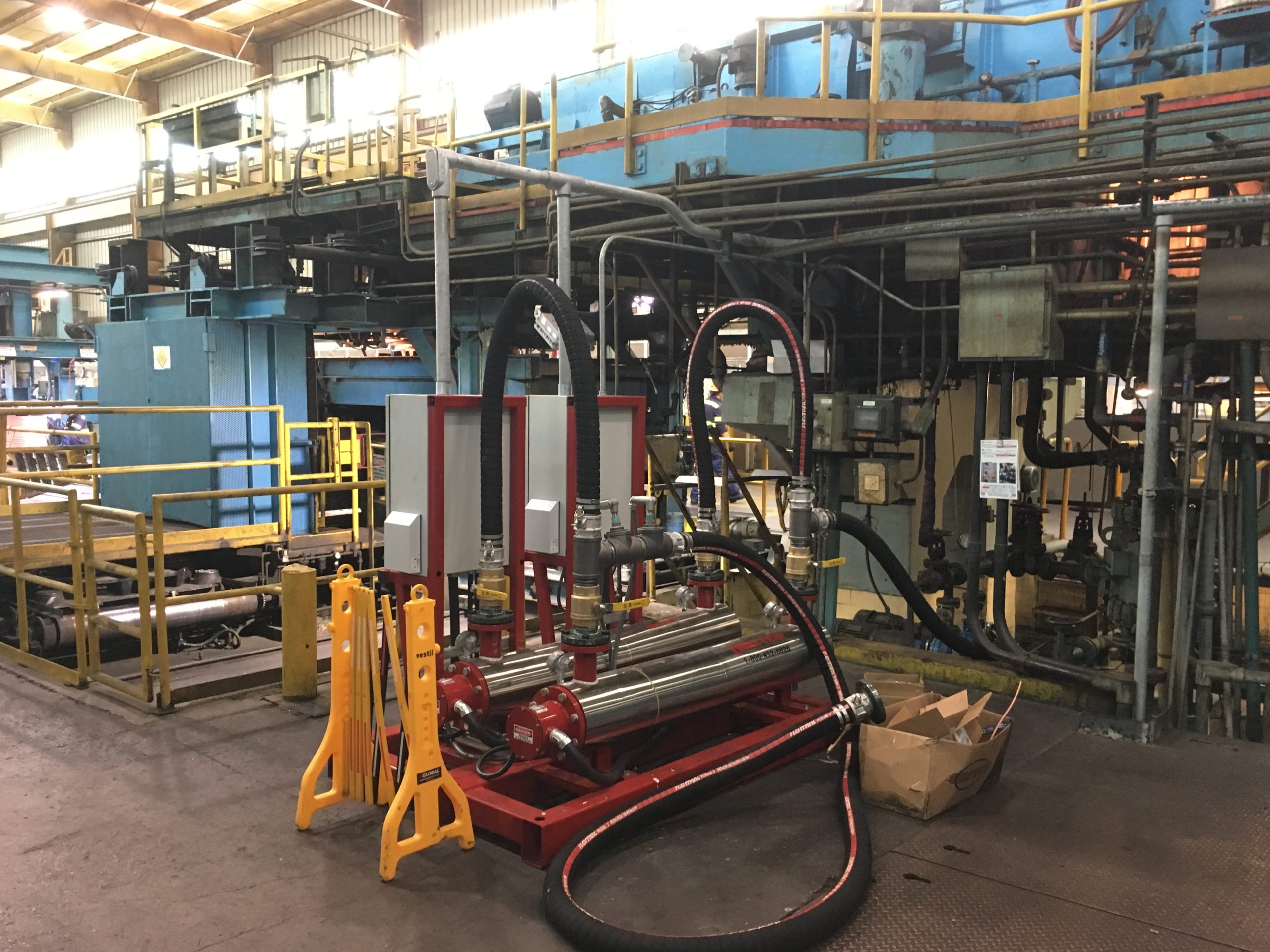
What is a Heat Trace System?
A Heat Trace System, or what is also known as an Electric Heat Tracing System or Thermal Tracing, is an engineered solution for applying targeted heating on a surface. It functions as a method for maintaining fluids at specific temperatures for operation within pipes or preventing them from freezing due to low temperatures.
Heat trace systems usually include a heating cable, control elements, insulation, and connections for energy supply. A heating cable traces around equipment on the surface, and it uses electrical energy and then converts it into heat. Sensors with control functions ensure that energy consumption and safety levels are maintained. Heat trace systems do not provide heating to an area or room. Heat trace systems provide localised heating for objects requiring temperature protection.
Key components of the Heat Trace System
Except for the heating cable, which is the central product, a full system would include various engineered components such as:
- Heating Cables– Source depends on the end-use, temperature range, surrounding conditions, and fluid.
- Insulation– Reduces heat loss
- Power Connection Kits– They are used for providing power to the heating cable.
- Temperature Sensors– They determine the temperature prevailing either in pipes or in the ambient and then supply it to the controller
- Controllers and Thermostats– Temperature controller with minimal energy consumption
How do heat trace systems work?
Although there is varying complexity with heat trace solutions, there is a surprisingly simple fundamental principle resist heating with controlled resistances and counteract loss.
A conventional electric heat trace cable system functions as follows:
Heat Generation
The main component that constitutes a heat trace system is based on the heating cable. When an electric current passes through the conductive materials contained in these heating cables, it generates heat. Heat energy is then transferred to either a pipeline or equipment.
Heat Transfer
The cable is installed directly along the pipe’s length (straight tracing), spiralled around larger sections (helical tracing), or installed in multiple parallel runs depending on the required heat output. The heat produced by the cable compensates for conductive, convective, and radiative heat losses that the pipe experiences relative to the ambient environment.
Insulation retains the Heat
Insulation is applied over the heating cable. Its purpose of the insulation is to minimize heat loss so that the heating cable can operate efficiently at target temperatures.
Regulation and Control
Sensors-such as RTDs or thermocouples that are monitoring pipe temperature or ambient conditions-send an input to the control panel and, upon that input, the controller regulates power delivery to the heating cable.
Thermal Balance
The system will constantly work in such a way as to maintain thermal balance-generated heat will equal the heat lost to the ambient environment that at all moments the fluid remains inside the provided limits of temperature.
Types of Heat Trace Systems
Heat Trace Systems generally fall into 2 categories- Electrical heat tracing and Fluid heat tracing. Each category includes sub-types of cables, each specified for certain usage conditions.
-
Electrical Heat Tracing System
This type of system employs heating cables that are fed with electricity and have the function of heating pipes, vessels, and equipment. Examples of types of electrical heat trace cables include:
- Self-Regulating Heating Cables- These heating cables can regulate their heating rates based on the surface on which they are laid. Their heating rate increases with a drop in temperature and decreases with an increase in temperature.
- Constant Wattage Heating Cables- These types of heating cables have a constant wattage per unit length and operate independently of local temperatures. These cables are useful for applications involving predictable and stable heating, but should be used with appropriate controlling devices.
- Mineral-Insulated Heating Cables- These cables have a metal outer covering with insulated wires made up of compacted minerals. These types of cables appear on the list because they have some medical uses, but they are primarily preferred and suited for industrial applications.
- Series Resistance Cables- These cables have a resistive conductor running throughout. Their design focuses on large pipeline heating and allows for uniform heating distribution, but has to be made precisely in terms of length so as to provide optimal electrical properties.
-
Fluid Heat Tracing System
Fluid-based heat tracing involves circulating a fluid through pipes laid alongside the equipment or piping that needs temperature regulation. In contrast to methods, fluid tracing depends on external heat sources, like boilers or heat exchangers.
- Steam Tracing- Steam travels through tubing (steam tracer lines) connected to the process pipe. As the steam condenses within the tubing, it gives off latent heat that heats the pipe’s exterior. Steam tracing is frequently utilized in industrial plants, particularly in locations where steam supply is abundant.
- Water tracing- Hot water circulates through tracer lines to prevent freezing or to maintain low temperatures. These installations are also rather common and can be placed in those locations where water heating has already been provided within the infrastructure of a facility.
- Heat Transfer Fluid Tracing- These systems circulate heated liquids, normally thermal oils, glycol mixtures, or other specialized fluids, through closed-loop tubing circuits. HTF tracing is particularly well-suited to applications requiring a steady, moderate temperature maintained without the swings possible with steam.
Applications of the Heat Trace System
Heat trace system finds application in several industries, all of which have their particular operational needs. Application categories include the following:
Freeze Protection
A heat trace system prevents water, chemicals, fuel, and other fluids from freezing inside the pipes or tanks. This protects the system integrity and avoids downtime caused by pipe bursts or blockages. It finds its application in the pipelines of fire protection, sprinkler systems, and water supply lines, among fuel transfer systems.
Maintenance of Process Temperature
In some industrial and manufacturing processes, the requirement would be to retain the temperature or flow efficiency within a desired limit.
Anti-Condensation
Heat tracing serves to keep the surface temperature above the ambient dew point to prevent condensation on any equipment, such as in storage tanks and switchgear cabinets.
Tank Heating
Large tanks that store liquids that solidify at lower temperatures rely on heat tracing combined with insulation in industries like water treatment, food manufacturing, petrochemical, and mining operations.
Conclusion
It plays a huge role in the maintenance of pipelines, tanks, and equipment across the range of industries. By preventing freezing, ensuring stable process temperatures, and protecting assets from operational risks, heat tracing systems contribute to the reliability of the facility for enhancing product quality and maintaining safety. Advanced cable technologies and intelligent controls have also been adopted in modern systems to achieve efficient energy use, high performance, and application-tuned heating. Since these systems are considered foundational, they have been used worldwide irrespective of the industries-whether it is industrial processing, commercial infrastructures, or environmental protection.