

Wattco experts provide engineered support and customized heating solutions that integrate with building management systems for HVAC. From system selection to optimization, we help improve control, energy efficiency, and long-term reliability across commercial and industrial facilities.
Building Management Systems for HVAC
A Building Management System (BMS), or Building Automation System (BAS), is a complex computer-based network with a goal of controlling and monitoring all mechanical and electrical systems in a facility. The main purpose of a BMS today is to manage the Heating, Ventilation and Air Conditioning (HVAC) of a building.
The main objective for integrating HVAC with a BMS is to create a harmony between comfort for the occupants of a building and operational performance. This is accomplished through central control of the systems, thus allowing for indoor environments to be healthy and productive, while reducing the enormous energy required for climate control. As the HVAC system can consume nearly 40% of the total energy required to operate a commercial building, the BMS represents a powerful tool for reducing costs and improving sustainability.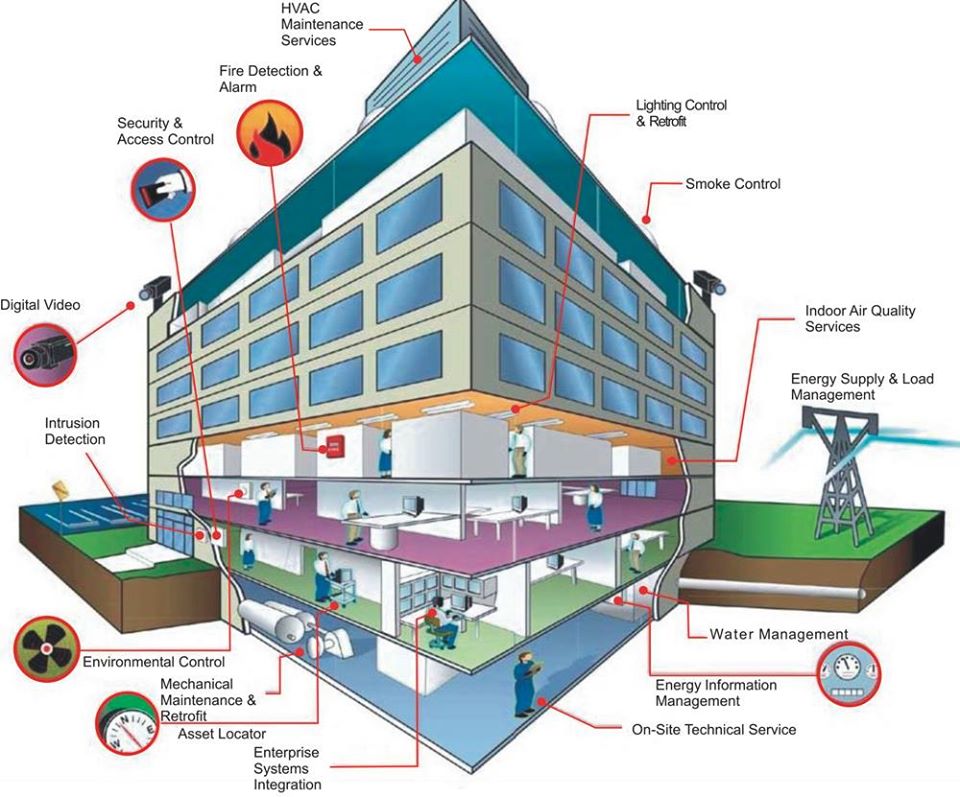
Technical Components of an HVAC BMS
The BMS will use various layers of hardware and software, all of which must work together in order to control the many different types of heating and cooling systems that are in operation today.
- Sensors (The Input Layer): These devices act as the “eyes and ears” of the system. Temperature sensors monitor room and duct heater conditions, humidity sensors track moisture levels, and $CO_2$ sensors measure indoor air quality. Occupancy sensors are also vital, as they detect the presence of people to determine if a room requires conditioning.
- Controllers (The Intelligence Layer): Often called Direct Digital Controllers (DDC), temperature controller microprocessors receive data from sensors. They use pre-programmed logic to decide how the HVAC equipment should react. For example, if a sensor reports a temperature of 24°C when the setpoint is 21°C, the controller calculates the necessary cooling output.
- Actuators and Command Devices (The Output Layer): These are the physical components that bring about changes. Motorized dampers that either let or restrict the flow of air through ducts, or valves that allow either hot or cold water to exit from coils, are among the different devices within this category.
- User Interface (Head-End): The user interface, which is also known as head-end, is the software dashboard for the facility manager. It gives him access to real-time information about the system’s performance as well as to adjust schedules and respond to alarms. This type of interface is typically web-based and allows for remote access by users from computers and mobile devices.
How the BMS Controls HVAC Operations?
BMS’s operational logic goes beyond simply allowing multiple “on” or “off” conditions with switches; it also uses sophisticated techniques to dynamically manage the climate.
Precision Scheduling
A Building Management System (BMS) will allow for a high degree of scheduling precision. Instead of running a full building at peak capacity for 24/7, for example, it can be programmed to operate based on business hours while accounting for holiday and weekend schedules. The system also has the ability to use “optimal start” logic. This determines the moment when it is best to energize heating or cooling, based on the prevailing weather conditions on the ground, thereby ensuring that the building reaches the desired level of comfort on-time for the occupants.
Demand-Controlled Ventilation (DCV)
Demand Controlled Ventilation (DCV) is a ventilation system that provides the appropriate amount of fresh air per person in a space using a building management system (BMS) to monitor carbon dioxide (CO2) levels generated by occupants. A BMS will adjust the amount of fresh air entering a space based on actual occupancy thus preventing excess energy consumption from heating or cooling outside air when a room is not occupied.
Variable Air Volume (VAV) Management
Variable Air Volume (VAV) systems provide the ability for one central air handling unit (AHU) to service multiple zones throughout a commercial building by coordinating multiple VAV boxes at each individual zone. The BMS coordinates the dampers at each of the VAV boxes to provide the amount of air that each zone requires based on actual occupancy conditions and other variables. This provides a solution in which one office space is not a freezer when an adjacent conference area is too warm.
Energy Efficiency and Sustainability
The most significant effect on energy savings from an HVAC-integrated BMS is the ability to reduce wasted energy by using “setpoint reset” strategies that adjust the temperature of the circulating water or air based on demand. For example: If a building only required mild cooling, the BMS could allow for higher chilled water temperatures increasing the overall efficiency of the chiller equipment.
By improving these processes, a functional BMS can reduce energy costs between 15% and 30%. This not only provides a rapid return on investment but also helps organizations meet modern environmental standards and carbon reduction goals. In the context of global sustainability, a well-tuned BMS is one of the most effective tools for making large-scale infrastructure “greener.”
Maintenance and System Longevity
System upkeep, and extending equipment life have become both a business practice and expectation in the HVAC industry. A Building Management System (BMS) operates as both an operational tool and a preventative or predictive maintenance tool. A lot of HVAC service is traditionally “reactive,” meaning the technician will fix something only after it fails. A BMS will allow you to take a “proactive” or “predictive” approach to maintaining your equipment.
The BMS will continuously monitor the following performance metrics: fan vibration, differential pressure across filters, and pump run time. If a motor starts to draw more current than normal, or if a filter becomes complete with dirt, the BMS can make an alarm that will be sent out to notify you of the issue before it fails. This allows maintenance teams to fix minor issues before they lead to expensive equipment failures. Furthermore, by ensuring that equipment only runs when necessary and operates within its ideal parameters, the BMS significantly extends the total lifespan of boilers, chillers, and fans.
Occupant Comfort and Productivity
While energy savings are a financial priority, the human element is equally important. Studies have consistently shown that poor indoor air quality and uncomfortable temperatures lead to decreased concentration and increased absenteeism.
A BMS ensures a stable environment by preventing the “hunting” effect, where a system overshoots its target temperature and then over-corrects. By maintaining a steady thermal environment and ensuring a constant supply of fresh air, the BMS creates a space where employees or tenants can remain productive and comfortable throughout the day.
Conclusion
HVAC Systems are now a requirement for Modern Facility Management, they have been converted into an active, responsive system through the use of high-tech sensors, intelligent controls and automated logic. The combination of these systems creates a seamless link between the mechanical requirements of heating and cooling to meet the needs of employees to have a comfortable, healthy place to work. Developing the BMS requires a great deal of engineering and a significant financial investment in the early stage, however, after all, are complete, long-term benefits of energy savings, fixtures and occupant satisfaction will be the foundation of efficient building design.