

Industrial Circulation Heaters for Hyperscale Data Center Thermal Management
When people picture a data center’s cooling problem, they picture getting rid of heat. Fair enough, that’s most of the job. But there’s a quieter side nobody talks about: sometimes you need to add heat, precisely and on purpose. Warming a coolant loop before servers go live. Holding a fluid above the dew point so it doesn’t sweat. Keeping outdoor piping from freezing solid in January. That’s where an industrial circulation heater does work you’d never expect a heater to do inside a building designed to shed heat.
Hyperscale data centers run on enormous liquid-cooling and facility-water systems, and those systems only behave when their fluid temperatures stay exactly where they should. Too cold, too uneven, too unstable, and things start going wrong across a campus that might span several buildings.
Industrial circulation heaters give operators controlled, accurate heating for the moments that demand it. Commissioning a new cooling loop. Startup after a shutdown. Testing equipment before live hardware arrives. Conditioning coolant to a target temperature. They’re not fighting the cooling system. They’re making it predictable. Let’s get into why that matters and how it’s actually done.
Why Thermal Management Matters in Hyperscale Data Centers?
At hyperscale, temperature stability isn’t a nice-to-have. It’s protection for some of the most expensive hardware on earth.
Stable fluid temperatures keep sensitive equipment safe from thermal shock and swings. They prevent condensation, which is a genuine threat once you’re running liquid right up against electronics. They keep the cooling system performing reliably, because a loop that’s drifting cold or fluctuating won’t hold the conditions the servers expect. And across a sprawling campus, consistency is everything, since one building running different conditions than another creates problems that are miserable to chase down. Get the fluid temperatures right and steady, and the whole facility gets more predictable. That predictability is what uptime is built on.
How Industrial Circulation Heaters Support Data Center Thermal Management?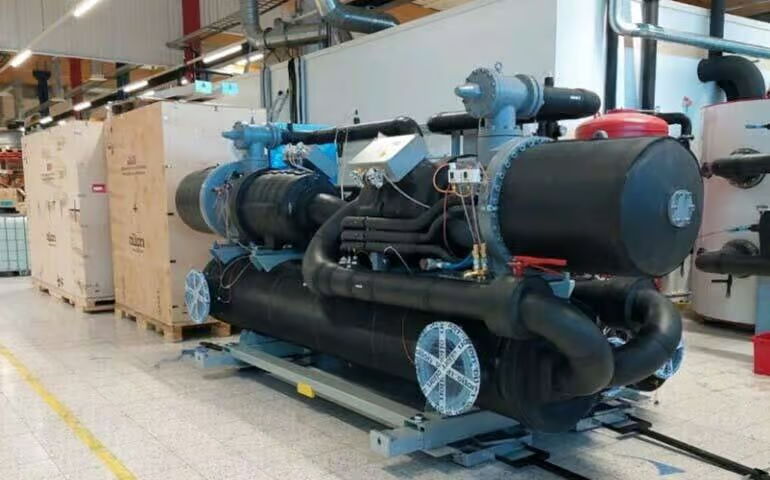
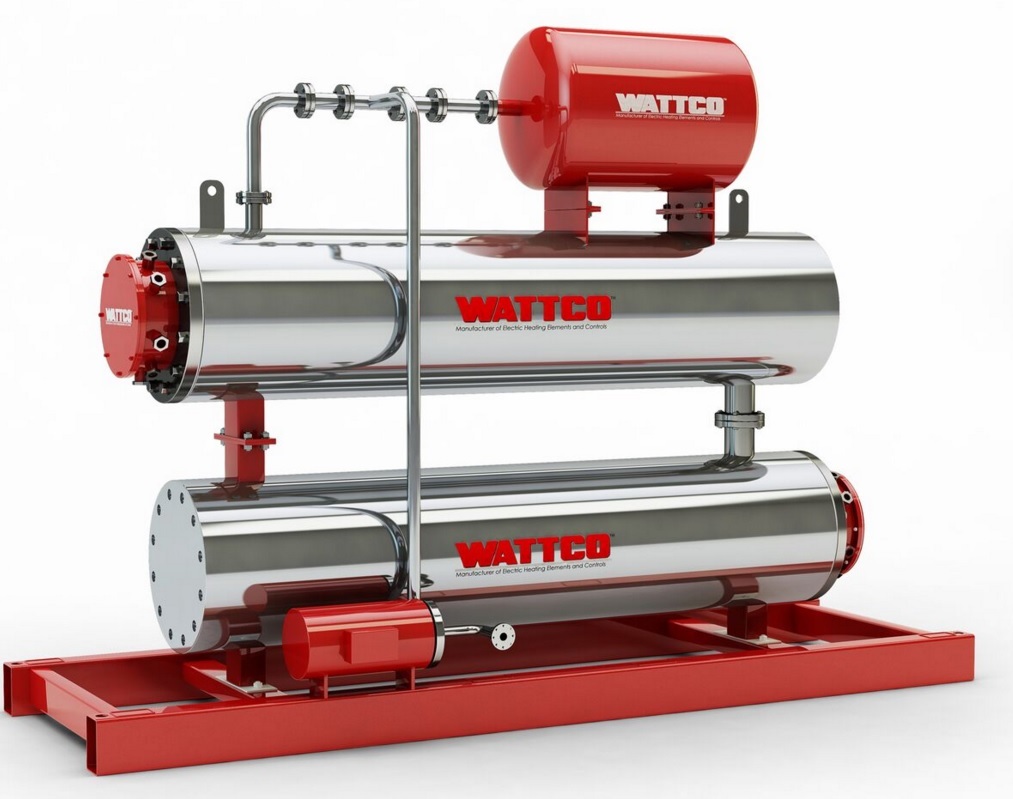
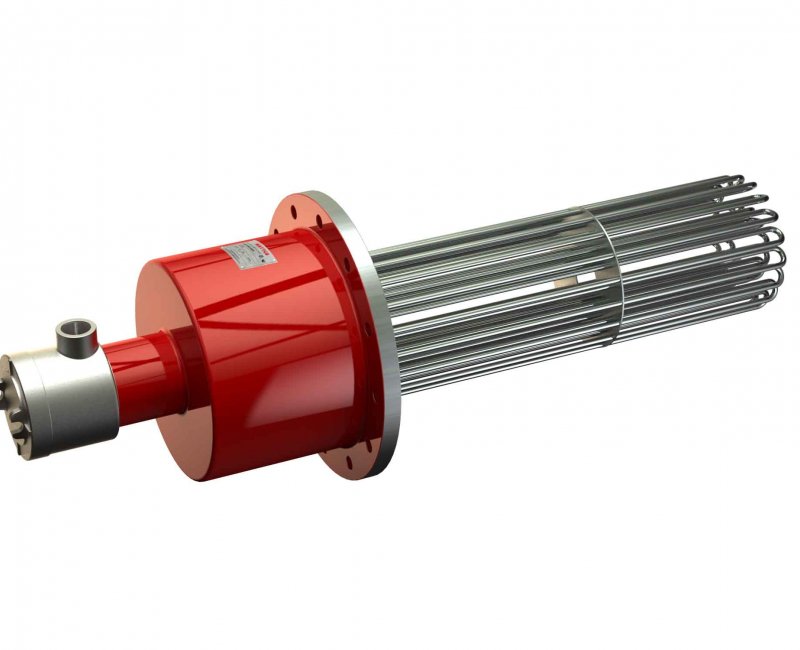
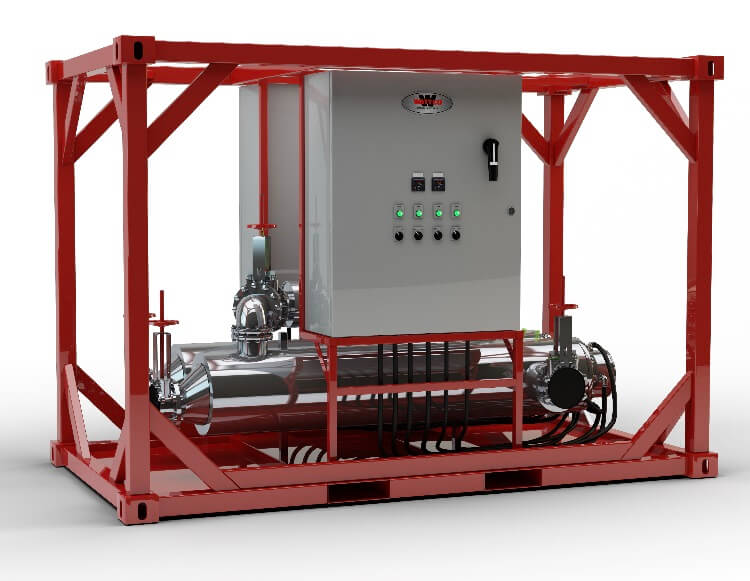
Here’s the basic mechanism. A circulation heaters warm continuously flowing water, glycol, or another heat-transfer fluid as it passes through, delivering accurate, uniform temperature control the whole way. The fluid enters, moves across the heating elements inside a sealed vessel, and leaves at the target temperature. Simple in concept, and genuinely useful in a handful of specific situations.
Maintaining Minimum Coolant Temperatures
Cooling fluid can actually get too cold, and that’s a problem more often than people realize. During startup, standby, or a cold snap outside, a loop can drop below the temperature the system was designed around.
A circulation heater holds the floor. It keeps the coolant from sliding below its minimum, so when the servers ramp up, the fluid is already sitting in the right window. No scrambling, no thermal shock to the hardware, no waiting for the loop to recover. Just a stable baseline the cooling system can build on, maintained quietly in the background.
Supporting Cooling-System Commissioning
Commissioning a new cooling loop is delicate work, and you don’t want to do it with live servers if you can avoid it. Circulation heaters let you bring the coolant loops up to controlled, known temperatures before any IT equipment or liquid-cooling gear enters full operation.
That means you can verify the loop behaves properly, check that pumps and controls respond, and confirm the whole system holds temperature, all before the expensive hardware shows up. It takes a lot of risk out of go-live. You’re proving the thermal system works on a heater’s schedule, not gambling with a hall full of GPUs.
Simulating Server Heat Loads During Testing
This one’s clever, and honestly it’s my favorite use. Before real servers are installed, how do you test whether your cooling distribution units, heat exchangers, pumps, and control systems can actually handle the load? You fake the load with a heater.
A circulation heater creates a predictable, controllable thermal load that stands in for the heat real servers would produce. So you can push your coolant distribution units and heat exchangers to their rated duty, watch how the controls react, and shake out problems, all without a single processor in the rack. It’s the thermal equivalent of a load bank, and it lets you commission and stress-test the cooling infrastructure safely and repeatably.
Preventing Condensation in Liquid-Cooling Systems
Condensation is the silent enemy of liquid cooling. Run a coolant loop colder than the surrounding air’s dew point, and moisture will form on the pipes, the cold plates, the fittings. Water and electronics sitting inches apart. Not good.
Circulation heaters help by keeping coolant temperatures above the room’s dew point, which cuts the condensation risk around pipes, cold plates, and cooling equipment. Hold the fluid just warm enough and the surfaces stay dry. For direct-to-chip systems especially, where coolant runs right onto the processor, that margin above dew point is a real safeguard against drips landing somewhere they absolutely shouldn’t.
Providing Freeze Protection in Cold Climates
Plenty of hyperscale campuses sit in places that get genuinely cold, and a lot of the cooling system lives outdoors. Dry coolers, heat-rejection equipment, the piping running between them. Left unheated in a hard freeze, a water or glycol loop can freeze and burst, and that’s a catastrophic, expensive failure.
Circulation heaters provide freeze protection by keeping those water and glycol loops, outdoor pipes, and heat-rejection units above freezing when temperatures crash. Often paired with glycol for extra margin, flanged heaters make sure the fluid keeps flowing and the pipes stay intact through the worst of winter. Cheap insurance against a very bad day.
Where Circulation Heaters Are Used in Hyperscale Data Centers?
These heaters show up in several parts of a large-scale cooling and testing setup. Here’s where you’ll typically find them.
Coolant Distribution Unit Testing
The coolant distribution unit, or CDU, is the heart of a liquid-cooling loop, so it has to be proven before it goes into service. A circulation heater supplies the controlled thermal load to test a CDU properly, letting engineers confirm it moves heat, holds temperature, and handles its rated duty before it’s trusted with live racks.
Direct-to-Chip Cooling Loops
Direct-to-chip cooling runs coolant right up against the processors, where temperature control has to be tight. Circulation heaters help condition and stabilize these loops, holding minimum temperatures and keeping the fluid above dew point so the loop stays ready and safe, whether during commissioning or standby.
Data Center Heat-Recovery Systems
More facilities are capturing their waste heat and putting it to use, feeding nearby district heating or other systems. Circulation heaters can support these heat-recovery loops by conditioning the fluid to the temperature the downstream system needs, smoothing out the supply so the recovered heat is actually usable rather than erratic.
What Engineers Should Consider When Selecting a Circulation Heater?
Choosing the right heater takes more than a wattage figure. It has to match the cooling fluid, the required temperature rise, the flow rate, the pressure, the electrical supply, and the environment it lives in. A few things deserve real attention.
Calculate Flow Rate and Required Heating Capacity
Start with the numbers that drive everything else. What’s your flow rate, and how much temperature rise do you need across the heater? Those two, along with the fluid’s properties, tell you the real heating capacity required. Size it carefully. Too little and you never hit temperature, too much and you’re wasting power and pushing watt density higher than the fluid can take.
Match Heater Materials to the Coolant
The coolant decides the metal. Water, glycol mixes, and specialized heat-transfer fluids each interact differently with inline heaters, especially the heater’s sheath and vessel, and the wrong material invites corrosion or scaling that shortens the heater’s life. Match the element sheath and construction to your actual coolant chemistry, and account for water quality, so the unit lasts.
Control Watt Density and Fluid Velocity
Here’s the technical heart of it. Watt density is how much heat each element puts out per unit of surface, and it has to stay low enough that the fluid film touching the element never overheats. Glycol especially degrades if you cook it against a too-hot surface. Adequate fluid velocity across the elements matters just as much, because good flow carries heat away and prevents hot spots. Balance watt density and velocity right, and the fluid stays healthy and the heater lasts. Get it wrong and you’ll foul the coolant and burn out elements.
Include Accurate Temperature and Safety Controls
Controls are what make a heater safe and precise. You want accurate temperature sensing, thermocouples or RTDs, feeding a good control system, plus a high-limit overtemperature cutoff as a hard backstop. A flow or no-flow switch is essential too, because an element firing with no flow across it will destroy itself in short order. In a data center, these protections aren’t optional. They guard both the fluid and the hardware downstream.
Plan for Redundancy and Maintenance
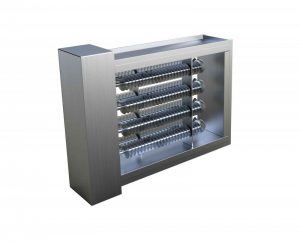
Hyperscale doesn’t tolerate downtime, so design for service from day one. Think about isolation valves so you can work on finned tubular heating without draining the system, replaceable heating elements, and real access for service and inspection. Build in backup capacity where the duty is critical, and plan the inspection routine up front. A heater that’s easy to isolate, service, and back up keeps a small maintenance job from becoming a facility problem.
Benefits of Circulation Heaters in Hyperscale Facilities
Pull it together and the value is clear. Industrial circulation heaters give you accurate temperature control and uniform heating of the fluid, so conditions stay exactly where you set them. They install compactly, run automatically once configured, and provide reliable support for the testing and commissioning work that de-risks a new facility. For a hyperscale operator, that combination of precision, automation, and reliability turns a simple heater into a genuinely useful tool across the cooling system’s whole life.
Final Thoughts
Industrial circulation heaters earn their place in hyperscale data center thermal management by doing the jobs cooling alone can’t. They condition the coolant, simulate IT heat loads for testing, guard against freezing and condensation, and make commissioning far more accurate and less risky.
There’s no one-size answer, though. The right heater gets chosen around the real fluid properties, the flow rate, the temperature requirements, the pressure, the controls, and the level of reliability the facility expects. Match the system to those conditions, and you get precise, dependable heating that quietly supports one of the most demanding cooling environments there is.
Wattco provides engineered circulation heating solutions for precise coolant conditioning and reliable thermal management in hyperscale data centers. Our circulation heaters and control systems support cooling-loop commissioning, simulated heat-load testing, condensation prevention, and freeze protection in water and glycol systems.